7 Best Tungsten Alloy Manufacturers for Global Buyers?
Tungsten alloy is no longer a niche material for specialist laboratories. It supports aerospace counterweights, medical shielding, mining tools, electrical contacts, and precision engineering. Its value comes from exceptional density, hardness, thermal stability, and wear resistance. However, performance depends heavily on powder quality, binder selection, sintering control, and inspection discipline.
The U.S. Geological Survey reported approximately 81,000 metric tons of global tungsten mine production in 2024, with China remaining the dominant producer (USGS, Mineral Commodity Summaries: Tungsten, 2025). The International Energy Agency also identifies tungsten among materials facing supply-chain concentration and strategic importance. The European Union lists tungsten as both a critical and strategic raw material under its Critical Raw Materials framework. These figures matter. A supplier’s location alone does not prove manufacturing strength.
John D. Jorgenson, a tungsten specialist at the USGS, has stated that “tungsten is used because of its high density, high melting point, and hardness.” That short explanation captures the material’s industrial appeal, but it does not reveal manufacturing consistency. Buyers must examine alloy composition, ISO certification, dimensional tolerance, radiological shielding data, traceability, and delivery history. A polished website is not enough.
This guide evaluates seven leading Tungsten Alloy Manufacturer candidates for global buyers. It considers technical capability, production scale, customization, quality systems, export experience, and application fit. The ranking is not absolute. A medical shielding buyer may value different evidence than an aerospace engineer. Some manufacturers disclose little. That weakness deserves attention, even when their products appear competitive. The best choice is rarely the cheapest quotation. It is the supplier that can repeatedly deliver the same dense, clean, accurately machined component.
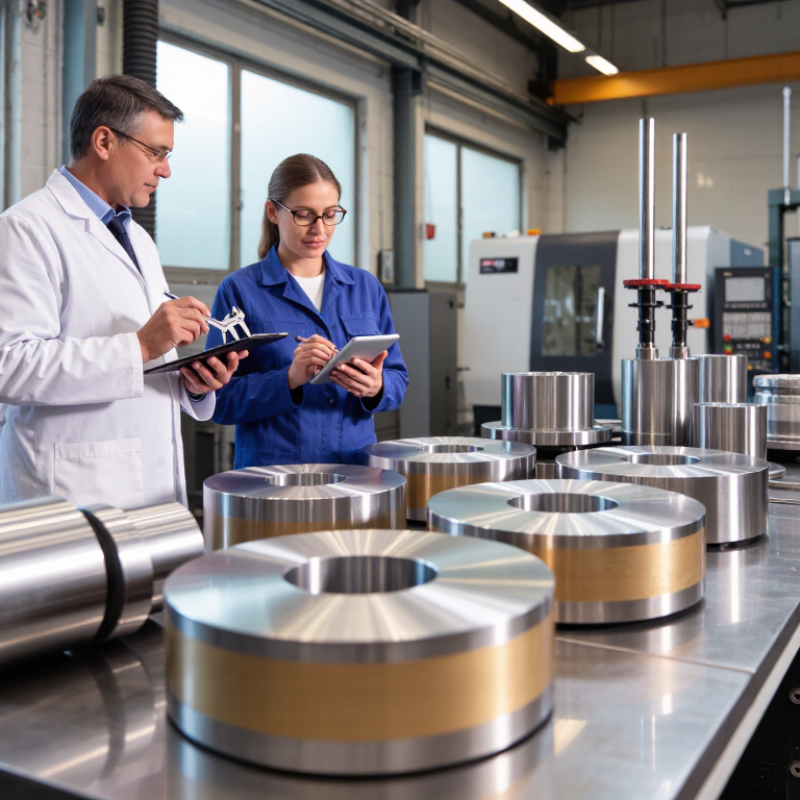
What Is Tungsten Alloy and Why Does Manufacturer Selection Matter?
Tungsten alloy is a dense engineering material, usually produced by combining tungsten powder with nickel, iron, copper, or other binders. Its density can approach 18.5 g/cm³, more than twice that of steel. This supports compact counterweights, radiation-shielding components, vibration-control parts, and aerospace balance systems. The USGS Mineral Commodity Summaries 2025 reported approximately 81,000 metric tons of global tungsten mine production in 2024. That figure shows how strategically important the raw material remains, but it does not guarantee consistent alloy quality.
Manufacturer selection matters because performance begins long before machining. A qualified producer should control powder size, binder chemistry, sintering temperature, porosity, and dimensional shrinkage. ASTM B777/B777M provides useful guidance for tungsten-base high-density materials, including density and mechanical-property requirements. Buyers should request batch-specific chemical analysis, density results, tensile data, and non-destructive inspection records. Traceability should reach the powder lot.
Small details matter.
In practice, I would also inspect sample edges, threaded holes, and machined surfaces. These areas often reveal hidden pores or brittle zones. A supplier may provide an impressive datasheet, yet overlook thermal expansion differences between the alloy and adjoining parts. That mistake can cause cracking during service. Reports from the International Tungsten Industry Association emphasize responsible supply-chain management and material efficiency, but documentation alone is imperfect evidence. Independent testing remains sensible, especially for safety-critical components. A manufacturer with stable process records, transparent corrective actions, and realistic tolerances is usually safer than the lowest quotation.
How to Evaluate Tungsten Alloy Manufacturers for Global Sourcing
Choosing the seven best tungsten alloy manufacturers requires more than comparing prices or polished websites. Global buyers should examine tungsten content, density, hardness, and dimensional tolerance. Ask for recent inspection reports, material certificates, and batch traceability records. A reliable manufacturer can explain its testing process clearly, not merely send attractive product photos.
Manufacturing experience matters. Review machining capabilities, production equipment, and experience with complex counterweights, shielding parts, or precision components. Request a sample before placing a large order. Check whether the sample matches the drawing, surface finish, and measured density. Also assess communication, lead times, packaging, and export documentation. These details often reveal operational discipline.
Tips: Compare at least three quotations using the same specifications. Verify test reports with an independent laboratory when the application is critical. Ask how rejected batches are handled. A supplier that admits limits may be more dependable than one promising everything. Do not ignore small inconsistencies. I have seen sourcing decisions fail because buyers trusted sales language instead of measurable evidence. A factory visit, video audit, or live production inspection can expose gaps that documents miss. Certifications help, but they should support real process control, not replace it. Leave room for review. Specifications may need adjustment after testing, especially when machining behavior or surface defects appear.
How Products, Certifications, and Custom Services Compare
When comparing the seven best tungsten alloy manufacturers, buyers should examine products beyond catalog photographs. Common offerings include rods, plates, counterweights, shielding parts, and precision-machined components. Density, alloy composition, hardness, surface finish, and dimensional tolerance directly affect performance. A reliable supplier provides batch numbers, inspection records, and material certificates with each shipment. Small details matter.
Certifications deserve careful checking. ISO 9001 may indicate controlled production, but it does not prove every part meets your drawing. Ask for recent test reports, chemical analysis, dimensional inspection data, and traceability from raw material to finished product. ASTM or EN compliance can support technical comparisons when the specification matches your application. RoHS or REACH documentation may also matter for regulated markets. Certificates should be verifiable, not merely displayed online.
Custom service often separates capable manufacturers from simple traders. Strong suppliers review drawings, suggest suitable alloy grades, confirm tolerances, and explain machining limits before quoting. They may provide prototypes, sample inspection, protective packaging, and stable production schedules. Clarify minimum order quantities, tooling charges, delivery terms, and replacement policies in writing. I have learned that fast replies can be misleading. A slower technical review may prevent costly rework. Still, no supplier is perfect; unclear tolerances or rushed approvals can create problems on both sides.
What Global Buyers Should Check Before Placing an Order
Choosing among the seven best tungsten alloy manufacturers requires more than comparing prices. Global buyers should verify alloy grades, tungsten content, density, hardness, and dimensional tolerances. Ask for evidence. Request recent material test reports, not only a standard certificate. Reliable suppliers should explain their testing methods and provide batch numbers for traceability.
A practical audit should examine production experience, machining capacity, and quality controls. Can the manufacturer produce thin plates, heavy counterweights, or precision rods consistently? Check sample parts under actual operating conditions. Inspect surface finish, edge quality, and measured weight. Samples reveal this. A polished website is not proof of stable production. I have found that small tolerance differences can affect assembly, especially when parts arrive from different batches.
Buyers should also confirm lead times, minimum order quantities, packaging, and export documentation before signing. Ask how the supplier protects dense parts from scratches, moisture, and movement during transport. Clarify whether inspection records accompany every shipment. Communication matters too. A technically capable factory may still create delays if replies are vague or specifications change informally. Compare written quotations line by line, including tooling, testing, replacement terms, and delivery conditions. Leave room for doubt. A careful buyer should test one order before expanding volume.