

What Is the Best Round Elastic Cord in 2026?

Choosing the best Round Elastic Cord in 2026 depends on how it performs in your hands, not just its label. A cord for a garment toggle needs different stretch and recovery from one used to bundle camping gear. Diameter, core construction, outer braid, and stated working load all matter. Small details matter.

Material trends offer useful context, but they cannot identify a winning cord by themselves. Textile Exchange’s 2024 Materials Market Report estimates global fiber production reached 124 million tonnes in 2023, with polyester accounting for about 57 percent. The report projects total production could reach 160 million tonnes by 2030. These figures describe the wider textile supply chain; they do not compare elastic-cord brands or prove durability.

For a practical comparison, look for clear specifications and test the cord under the conditions you expect to use. Record its diameter, extension under a measured load, and recovery after repeated stretching. ASTM D2256/D2256M provides a standard method for measuring tensile properties of yarns, but a finished braided cord may behave differently. That distinction is easy to overlook. A product page may promise strong stretch without stating how it was tested. This guide weighs measurable performance, construction, comfort, and value, while noting where available evidence falls short. No single cord suits every project.
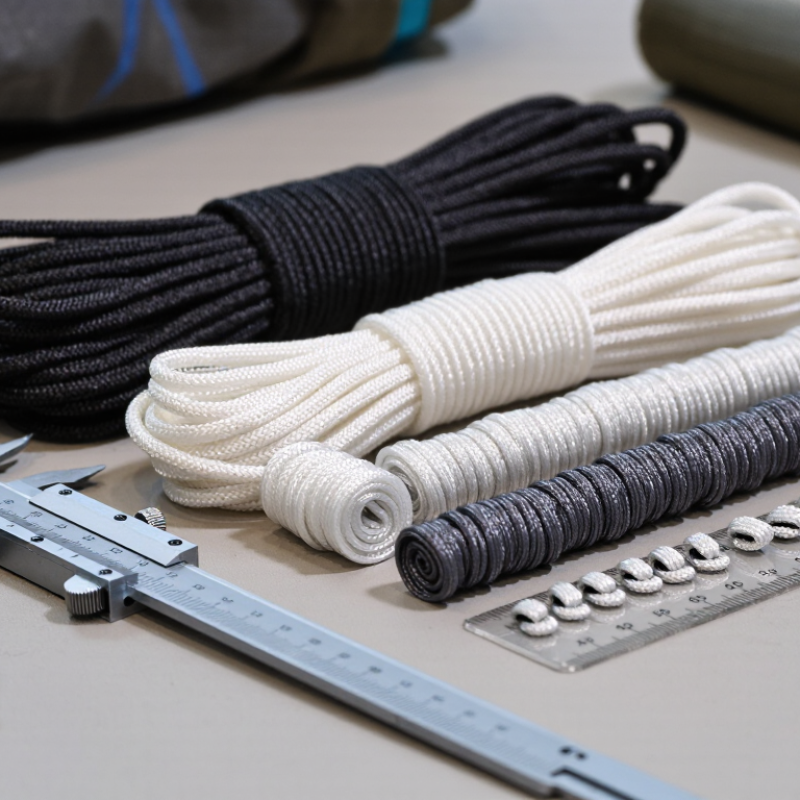
What Is the Best Round Elastic Cord in 2026?

What Round Elastic Cord Is and How It Works

Round elastic cord is a narrow, cylindrical strand with stretchy filaments inside a woven or braided cover. The core provides stretch and rebound, while the outer sheath helps protect it and gives the surface grip. The core is often rubber or another elastomer; the cover may be polyester, nylon, or similar fiber. Materials affect flexibility, abrasion resistance, and how the cord handles sun and moisture.

When pulled, the core elongates as its filaments stretch and shift. Release the tension, and the cord contracts toward its original length. It is not magic. Repeated stretching, sharp edges, heat, and constant tension can reduce its recovery. A cord that feels springy by hand may still be wrong for a particular load, so check its stated use rather than relying on feel alone.

For a good fit, match the diameter and stretch to the job. A thin cord can run through a jacket hood channel; a thicker one may suit a tarp loop or gear tie. Measure with the cord relaxed, then test the setup gently. More stretch can sound helpful, but it may leave a closure loose. Small details matter. Check the sheath for fraying and the core for exposure, especially after outdoor use.

Key Properties That Shape Cord Performance

What Is the Best Round Elastic Cord in 2026?
Key Properties That Shape Cord Performance

A dependable round elastic cord balances stretch, recovery, strength, and resistance to wear. A cord that stretches far may still perform poorly if it stays lengthened after repeated pulls. Check the stated working load and elongation, then compare samples under the same conditions. Feel the sheath, too: rough fibers can snag on eyelets, while a loose braid may expose the core. Small details matter.

Material choices shape those results. A rubber or latex core supplies elasticity; a polyester or nylon sheath helps resist abrasion. Textile Exchange’s Materials Market Report 2024 says polyester represented 57% of global fiber production in 2023. That figure describes fiber supply, not cord quality. For braided-cord comparisons, ASTM D6775 provides a method for measuring breaking strength and elongation. Still, a single test cannot predict years of outdoor exposure or repeated knotting.

Tips: Ask for test results at a stated extension and load, and compare cords at the same diameter. Test a short sample through repeated stretches, then check whether it returns close to its original length. I would not choose by maximum stretch alone. It is easy to overlook.

Comparing Materials, Diameters, and Construction Types

The best round elastic cord depends on what it must endure: repeated stretching, outdoor exposure, or rubbing against a sharp-edged fitting. Natural rubber cores often provide lively rebound, while synthetic elastomers may better suit specific aging or weather conditions. Check the actual material specification; “synthetic” alone does not guarantee better outdoor performance. Small detail, big difference.

Diameter changes the available cross-sectional area. A 4 mm round cord has about 12.6 mm² of area; a 6 mm cord has about 28.3 mm², or 2.25 times as much. These are geometric calculations, not load ratings. ASTM D412 and ISO 37 describe tensile testing for rubber and elastomers. Ask for test data showing tensile strength and elongation, rather than judging strength by diameter alone. Results can vary with formulation and test conditions.

Construction matters too. A braided polyester jacket can protect the elastic core from abrasion and help contain it during use, while braid tightness affects stretch and feel. For wet, sunny use, inspect the stated jacket and core materials, then test a short sample outside. I would compare cords at the same diameter and under the same load. Not perfect, but more useful than choosing by touch. Supplier test reports should identify the method, specimen, and conditioning; otherwise, the figures are hard to compare.

How to Choose the Best Round Elastic Cord for Your Needs in 2026

Choosing the best round elastic cord starts with the job, not the label. For a drawstring, prioritize easy stretch and a soft braid. For a tarp or gear loop, check the working load, recovery, and resistance to abrasion. Measure the cord’s diameter against its channel; a thick cord can bind, while a thin one may cut into fabric. Fit matters more. Check the maker’s test data for elongation and breaking force, and avoid treating breaking force as a safe working load.

Material affects feel and durability. Polyester resists moisture better than many natural fibers, while nylon can feel supple but may stretch more under load. Textile Exchange’s Materials Market Report 2024 estimates polyester made up 57% of global fiber production in 2023; that is useful market context, not proof that polyester cord suits every task. Ask whether the figure describes the finished cord or only its sheath. That is easy to miss.

For comparison, request test conditions, sample diameter, and cycle performance. ASTM D4964 covers tension and elongation testing for elastic fabrics, not a universal rating for round cord. ISO 2062 measures yarn tensile properties, but yarn data alone cannot predict a braided cord’s behavior. Test a short sample under the load and weather it will actually face. I would still leave a margin; cords can lose recovery with use.

Testing, Caring for, and Replacing Round Elastic Cord

What Is the Best Round Elastic Cord in 2026?

Testing, Caring for, and Replacing Round Elastic Cord

Test a short sample before relying on round elastic cord for a project. Measure its relaxed length, stretch it gently, then release it. Does it return close to its original length? Repeat the check several times, since one stretch can hide weak recovery. Small changes matter. Check the cord’s surface, too. Flattened spots, cracks, loose fibers, or uneven thickness can signal wear. If the cord will support repeated movement, test a piece under similar conditions before installing it.

Tips: Keep a small offcut for comparison. Mark its relaxed length with a ruler, and avoid pulling it to its limit. Do not yank. Record when the cord was installed if you use it often; memory is not a great maintenance system.

Keep elastic cord away from sharp edges, prolonged direct sun, and excess heat, which may weaken its stretch. Wipe off dirt with mild soapy water, then let it dry fully before storage. Avoid harsh cleaners unless the cord’s care instructions specifically allow them. Replace cord that stays stretched, feels brittle, or shows visible damage. One imperfect judgment is using appearance alone: cord can look fine but recover poorly. When performance matters, compare it with an unused sample and replace it if recovery has noticeably changed.

What Is the Best Round Elastic Cord in 2026? — Testing, Caring for, and Replacing Round Elastic Cord
Use or check Cord to consider Indicative size or measure What to assess Care and replacement guidance
Sewing and crafts Round elastic with a stretchable rubber or latex core; a braided textile cover can help protect the core. About 1–2 mm is a practical starting range for fine craft work; check that it fits the casing or bead holes. Check that the cord passes through the intended opening and returns close to its original length after a gentle stretch. Keep away from sharp edges and excessive heat. Replace if the core is exposed, the cover is badly frayed, or the cord no longer recovers reliably.
Garment drawcords and light clothing applications Soft, flexible covered elastic selected to suit the garment and the wearer’s comfort. About 2–3 mm can be a useful starting range, but casing width and sewing instructions should determine the final size. Check flexibility, surface comfort, seam compatibility, and recovery after repeated gentle extensions. Follow the garment’s washing instructions. Replace when the cord has become noticeably slack, uneven, brittle, or damaged.
Light bundling and general utility A thicker covered elastic cord chosen for the bundle size and the amount of stretch needed. About 3–5 mm is an indicative range for light-duty tasks; diameter alone does not establish a safe load. Check the manufacturer’s stated stretch and load limits, then inspect the full cord length and attachment points before use. Do not use worn elastic to secure heavy or hazardous loads. Replace it if strands are exposed, the cord has permanent deformation, or fittings are damaged.
Outdoor or sun-exposed use A cord specified by its maker for outdoor exposure, with a cover and core appropriate to the intended conditions. Choose by the application’s required fit and the product’s rated limits; no diameter is universally suitable. Check the stated UV, temperature, and moisture guidance. Before each use, look for fading, cracking, fraying, or loss of recovery. Limit unnecessary sun and heat exposure. Clean with mild soap and water when appropriate, rinse, and air-dry; follow the product instructions.
Simple recovery check Compare the cord with an unused sample of the same product, if available. Mark a 100 mm section, extend it gently to a known length, release it, and measure again after a consistent short rest. Do not exceed the product’s stated stretch limit. Record the starting length, extended length, and recovered length. A repeatable test helps identify change; use the manufacturer’s limits for pass/fail decisions. There is no single recovery threshold for every cord. Replace it if recovery has declined enough to make the application unreliable.
Routine care and storage Any cord should be stored according to its material and maker’s instructions. Store clean, dry, and loosely coiled rather than kept stretched for long periods. Inspect for cuts, exposed core, loose cover, sticky or brittle areas, and damaged knots or end fittings. Avoid prolonged contact with oils, solvents, sharp edges, and high heat unless the product is specifically rated for them. Replace damaged cord rather than repairing it for a safety-critical use.

Selection note: There is no single “best” round elastic cord for every task. Diameter ranges above are indicative starting points, not universal specifications; material, construction, rated stretch, environment, and intended load all matter. Follow the cord maker’s instructions, and do not rely on elastic cord as a life-safety or heavy-load restraint unless it is specifically rated for that purpose.

This website uses cookies to ensure you get the best experience on our website