Tips for Caring for Premium Leather Goods How to Keep Them Lasting?
Taking care of Premium Leather Goods is vital for longevity and aesthetics. Expert Pamela Smith, an authority in leather care, once stated, “Investing in premium leather requires a commitment to its upkeep.” This underscores the importance of proper maintenance for lasting quality.
High-quality leather needs attention. Dust and dirt can accumulate, dulling its shine. Regular cleaning with a soft cloth is a simple yet effective practice. Conditioning the leather helps retain its natural oils. These small efforts can prevent cracks and wear that arise over time.
However, many overlook these essentials. They believe that premium leather is invulnerable. This mindset can lead to disappointment. Reflecting on maintenance routines can often reveal areas for improvement. Premium Leather Goods deserve the best care to assure they withstand the test of time.
Understanding Premium Leather: Types and Characteristics
Premium leather is revered for its elegance and durability. Different types exhibit unique characteristics. Full-grain leather showcases the raw hide, preserving its natural textures. This option ages beautifully, developing a rich patina. Top-grain leather, on the other hand, is sanded and treated, offering a smooth finish. It’s less breathable but resistant to stains.
Understanding these types helps in maintenance. Each leather requires specific care to avoid damage. For example, an accidental water spill on full-grain leather can cause staining. Regular conditioning is crucial. It prevents drying and cracking. Using the wrong product may ruin the leather's surface.
Cleaning leather goods often feels daunting. A simple solution is to dust them regularly with a soft cloth. Occasional deep cleaning is essential but needs a cautious approach. Some people hesitate to do this for fear of harm. A thought here is to test cleaners on inconspicuous areas first. This step helps avoid potential mishaps. The beauty of premium leather lies in its texture and feel. Neglecting to treat it with respect can lead to regrets later.
Tips for Caring for Premium Leather Goods
| Leather Type | Characteristics | Care Tips |
|---|---|---|
| Full-Grain Leather | Most durable, retains natural texture and marks. | Use a damp cloth for cleaning; avoid excessive water. |
| Top-Grain Leather | Softer and more flexible than full-grain; has a finish applied. | Condition regularly to maintain suppleness and avoid cracking. |
| Corrected-Grain Leather | Has an artificial grain applied; less expensive. | Clean with a leather cleaner and avoid harsh chemicals. |
| Suede | Soft, velvety texture, more vulnerable to stains. | Brush to remove dirt; apply a suede protector spray. |
| Nubuck | Similar to suede but made from the top layer of leather; very durable. | Use a soft brush to clean; avoid moisture as much as possible. |
Essential Tools for Leather Care: What You Need to Maintain Quality
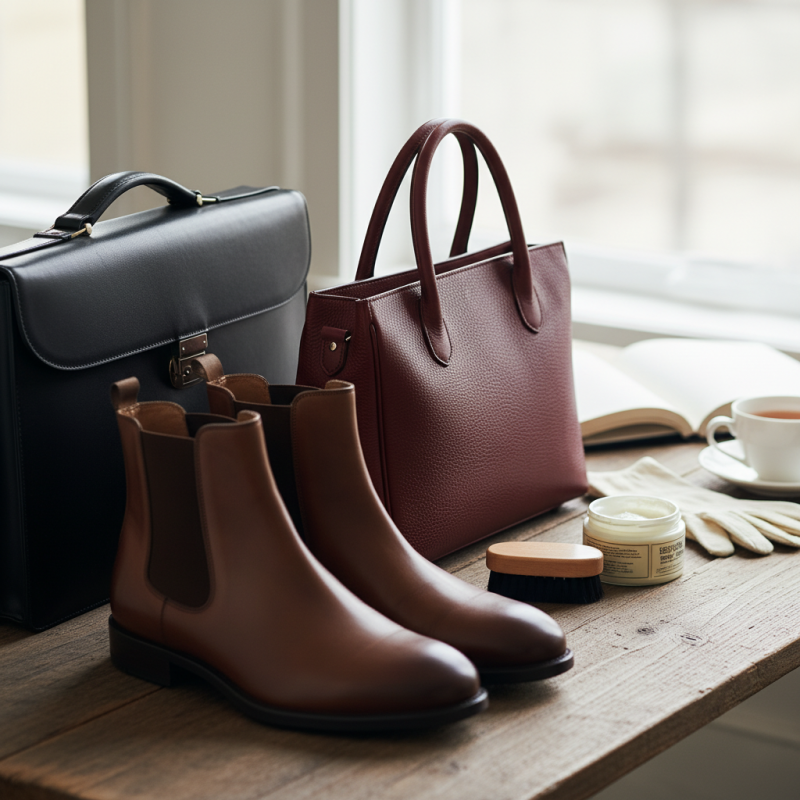
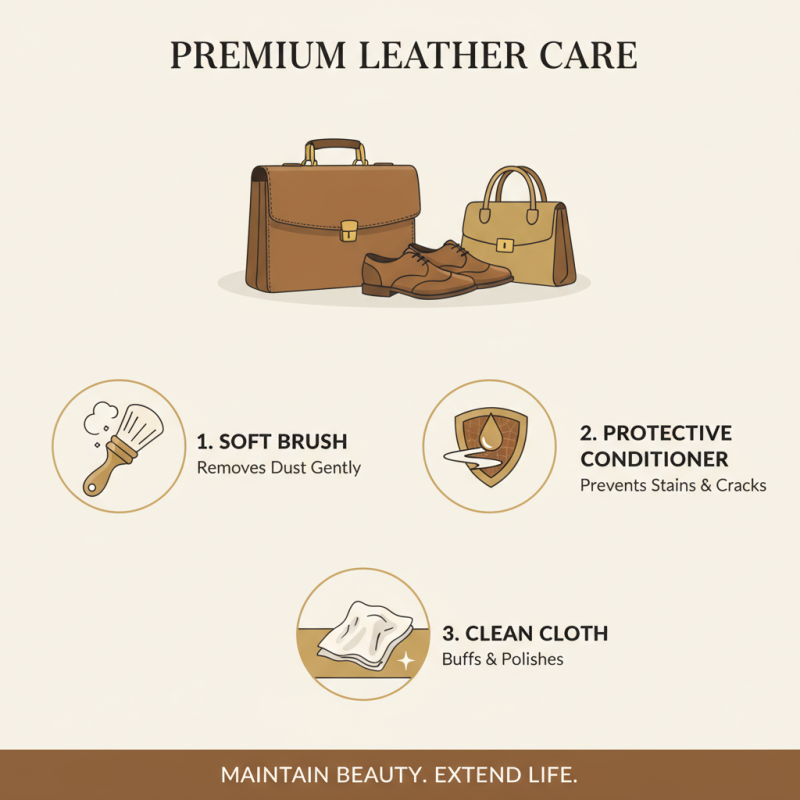
Caring for premium leather goods requires the right tools. These tools can help maintain their beauty and extend their life. A soft brush is essential for removing dust. It helps to keep surfaces clean without damaging the leather.
Another must-have is a quality leather conditioner. This product nourishes the leather, keeping it soft and supple. Apply it regularly to prevent cracking. Always choose a conditioner made for your specific leather type. A little goes a long way, but too much can lead to a greasy finish.
Don’t forget about a protective spray. This helps guard against stains and water damage. Apply it evenly and let it dry fully. Conditions often change: heat and humidity can affect leather. Pay attention to your environment. Regular care is key, but listen to your leather. If it looks dull or feels rough, it needs your attention.
Cleaning Techniques for Premium Leather: Step-by-Step Guide
Cleaning premium leather goods requires care and attention. Start by using a soft, dry cloth to wipe away dust. This simple step can help maintain the leather's natural beauty. For tougher stains, consider using a damp cloth with a small amount of mild soap. Always test a small area first to ensure no discoloration occurs.
Regular conditioning is essential. Apply a leather conditioner every few months. This keeps the leather supple and prevents cracks. Use a clean, soft cloth to apply the conditioner evenly. Remember to let the leather absorb the product fully before further use.
Tips for caring for your leather goods: store them in a cool, dry place. Avoid direct sunlight to prevent fading. Protect them from moisture with a waterproof spray suitable for leather. Regular maintenance can enhance longevity. Don't neglect them; leather needs love and care to thrive. Each item tells a story, and with proper care, those stories can last for years.
Conditioning Leather Goods: Importance and Application Methods
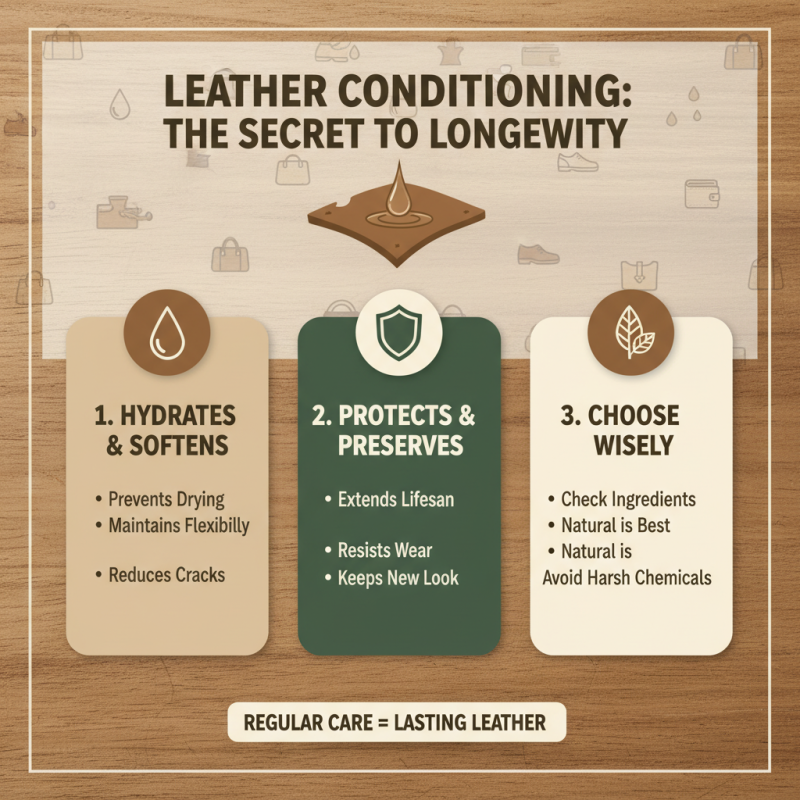
Conditioning leather goods is crucial for their longevity. It hydrates the leather, helping it maintain its softness and flexibility. Over time, leather can dry out, leading to cracks. Regular conditioning can prevent these issues. Purposely choosing the right conditioner is important, as not all products work the same. Check the ingredients. A natural conditioner is often best.
Application methods are equally important. Begin with clean leather. Dust and dirt can cause damage when mixed with conditioner. Use a soft cloth to apply the product evenly. Don't rush this process. Allow the conditioner to soak in properly. Spending time on this can make a noticeable difference. Sometimes, you may overapply, leaving a sticky residue. It’s important to learn from these moments.
Evaluate the frequency of conditioning. Too little may lead to dryness, while too much can create build-up. Practice makes perfect. Keep an eye on the leather’s texture and feel. Each item will have its own needs. Observe the changes over time. Reflection on your care routine can lead to improved results.
Storage Tips for Leather Items: Ensuring Longevity and Preservation
Proper storage is crucial for maintaining the quality of premium leather goods. Heat and humidity can damage leather. A report from the Leather and Hide Council indicates that moisture can cause mold growth in leather products. Store items in a cool, dry place. Avoid attics or basements, where temperature and humidity fluctuate.
Use breathable dust bags for protection. Plastic bags trap moisture and can lead to deterioration. According to a study by the International Council of Tanners, leather stored in breathable materials has a longer lifespan. Ensure your leather items are not too tightly packed. This can cause creases or misshapen products over time.
Regular inspections are also essential. Check for signs of wear or damage. If left unattended, small issues can become significant problems. Consider using a leather conditioner periodically, even while in storage. This keeps the leather supple and prolongs its life. Neglecting these practices may lead to unwanted surprises when you retrieve your leather items.
Related Posts
-
China Leather Goods Thrive Amidst US China Tariff Challenges
-
Common Issues Faced When Choosing Best Leather Accessories
-
What Are the Essential Characteristics of High-Quality Leather Products?
-
Discover the Timeless Elegance of Leather Gifts: A Guide to Choosing the Perfect Artisan Piece
-
Explore the Elegance: How Leather Wallets Elevate Your Everyday Style
-
Top 10 Tips for Choosing the Best Small Leather Goods for Everyday Use