

Why Choose a Reliable Lantern Festival Supplier?
A lantern festival may look effortless from the crowd: glowing silk, steady pathways, and lanterns bright against the evening sky. Behind that scene are design decisions, production schedules, installation teams, and weather-sensitive materials. Choosing a reliable lantern festival supplier helps connect those details before opening night. Small failures matter. A weak frame, late shipment, or unclear setup plan can quickly change the visitor experience.
The Events Industry Council’s 2019 Global Economic Significance of Business Events study, conducted with Oxford Economics, estimated 1.5 billion business-event participants worldwide. It also reported about $1.5 trillion in direct spending. These figures cover business events, not lantern festivals, but they show how much coordination large gatherings can require. That distinction matters. A supplier should be judged on relevant project evidence, not impressive claims alone.
Ask to see installation photos, material specifications, delivery timelines, and references for projects of similar scale. Check how the team handles repairs, replacement parts, and changes to the layout. A sample lantern can reveal more than a glossy catalogue: inspect its seams, frame, wiring, and finish in person. Good communication helps, but it cannot fix every problem. No supplier gets every detail right. That is worth admitting. The stronger choice is one that identifies risks early, explains limits clearly, and provides a practical plan for keeping the festival safe, consistent, and memorable.
What a Lantern Festival Supplier Provides
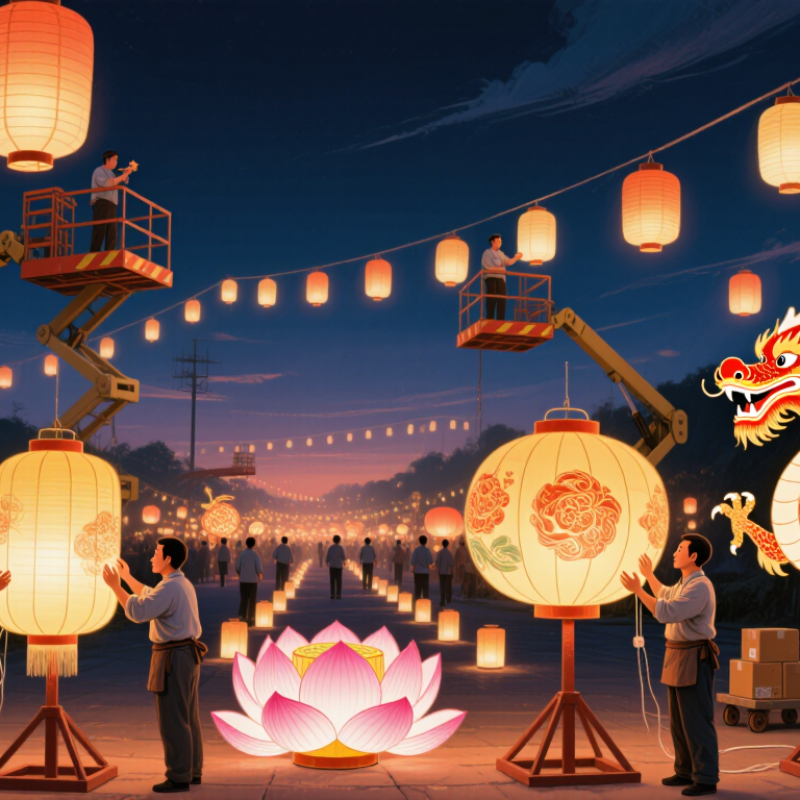
A lantern festival supplier provides more than finished lanterns. A capable team can turn a theme into scale drawings, color samples, and a practical production schedule. These early details help organizers check sightlines, visitor flow, and how lanterns will look after dark. Small mockups matter.
Suppliers may fabricate frames, shape fabric or translucent panels, install LED lighting, and prepare each piece for transport. Ask about frame materials, electrical connections, weather exposure, and repair access. A lantern near a walkway may need sturdier anchoring than one displayed indoors. Good documentation helps crews install pieces in the right order.
Some suppliers also coordinate delivery, installation, testing, and on-site adjustments. Confirm who handles lifting equipment, cable routing, and daily inspections before the event opens. Request drawings and a packing list, not just attractive renderings. Plans can still change when a venue’s dimensions differ from the site survey. That happens. A reliable supplier explains the trade-offs, records revisions, and gives the organizer clear points of contact.
How Supplier Reliability Affects Lantern Quality and Safety
Why Choose a Reliable Lantern Festival Supplier?
How Supplier Reliability Affects Lantern Quality and Safety
A dependable supplier can make a visible difference in lantern quality and event safety. Ask how frames are checked for sharp edges, loose joints, and uneven balance. Inspect stitching and panel seams, too. A lantern may look beautiful in a photo but sag when assembled. That detail matters.
Electrical lanterns need particular care. Request clear instructions for power connections, approved components, and safe setup. Check that cables are undamaged and fittings stay secure during installation. Reliable suppliers should provide product specifications and respond clearly to technical questions. Vague answers are a warning sign. So are missing inspection records.
Tips: Request a sample or recent production photos, then check the frame, seams, and lighting before ordering in volume. Confirm delivery dates and packaging details in writing. Keep a simple inspection list for arrival and setup. No checklist catches every flaw, and I would not assume a polished finish means a safe product. A small defect can be easy to miss.
Production Standards and Customization Options
Why Choose a Reliable Lantern Festival Supplier?
Production Standards and Customization Options
A reliable supplier makes production checks visible. Ask how frames are measured, seams are secured, and electrical parts are tested before shipment. For outdoor displays, confirm the specified weather protection and request test records, not just verbal assurances. Color samples and a full-size prototype can reveal differences that renderings miss. Small details matter: a loose cable or uneven fabric tension can change the finished display.
Customization should fit the site, not only the concept. Discuss dimensions, lighting layout, fabric color, frame materials, installation points, and access for maintenance. The U.S. Department of Energy reports that LED lighting uses at least 75% less energy and lasts up to 25 times longer than incandescent lighting. That comparison is not a guarantee for every lantern; actual performance depends on components and operating conditions. I would still check brightness and color in a nighttime sample. Specifications can look perfect on paper, but sometimes they do not.
Tips: Put dimensions, finishes, light color, and inspection steps in one approved specification sheet. Keep it simple. Agree on how changes are documented before production begins.
Shipping, Installation, and Event Support
Shipping, installation, and event support can decide whether festival lanterns feel magical or merely unfinished. A reliable supplier treats transport as part of the design, not an afterthought. Before dispatch, each piece should be labeled by installation zone, checked against an item list, and protected with suitable padding. Small connectors and fasteners deserve separate, clearly marked bags. They are easy to misplace.
Schedules need room for reality. A delayed truck, wet ground, or narrow access gate can change the setup plan. Ask for a delivery window, crate dimensions, unloading requirements, and one named contact for practical questions. Photos of packed components and a simple site plan help the local crew spot problems early. No plan is perfect.
Installation support should cover more than sending a manual. Clear assembly steps, connection diagrams, and safe cable-routing guidance can reduce confusion when the site is busy and light is fading. For larger displays, confirm how many technicians will attend, what tools they bring, and which tasks remain with the venue team. An on-site walkthrough before opening can catch loose fittings or uneven bases. Leave time for adjustments; that part is often underestimated. During the event, responsive support matters if a section dims or a connector needs checking. Agree on response hours and an escalation method before the first crate ships, not during opening night.
Why Choose a Reliable Lantern Festival Supplier?
Shipping, installation, and event support each have four practical checkpoints to confirm when planning a festival display.
Checklist counts, not supplier performance ratings: shipping covers protective packing, documentation, tracking, and contingency planning; installation covers site checks, crew and tools, assembly, and safety; event support covers a contact person, troubleshooting, spare parts, and teardown coordination.
How to Evaluate a Lantern Festival Supplier
Why Choose a Reliable Lantern Festival Supplier?
How to Evaluate a Lantern Festival Supplier
A dependable supplier should explain how each lantern is designed, built, transported, and installed. Ask for material specifications, lighting details, and care instructions. Check whether the proposed structures suit your site’s wind, rain, and foot traffic. Clear answers matter. If details remain vague, request drawings or a sample before approving production. A small sample can reveal uneven seams, dull colors, or weak supports that photos may hide.
Review past projects that resemble your event in scale and setting. Ask for client references, realistic production schedules, and a written list of what installation includes. Confirm who handles repairs, wiring checks, and removal after the festival. Compare quotes line by line; a low price may leave out transport, equipment, or onsite labor. I’ve seen tidy proposals become confusing once setup began, so put responsibilities in writing.
Tips: Request close-up photos of joints, paintwork, and wiring. Ask how damaged lanterns are handled during the event. Check that the supplier can meet your access hours and site measurements. Keep a little schedule flexibility; even careful plans can miss a detail.
Why Choose a Reliable Lantern Festival Supplier? - How to Evaluate a Lantern Festival Supplier
Use this practical scorecard to compare suppliers. The weights are suggested evaluation priorities, not industry certification requirements. Ask for supporting documents and sample evidence before placing an order.
| Evaluation dimension | Weight | What to evaluate | Evidence to request | Positive indicator |
|---|---|---|---|---|
| Product quality and finish | 20% | Frame stability, stitching or joining, surface finish, color consistency, and workmanship. | A production sample, close-up photos, and an agreed inspection checklist. | The sample matches the approved drawings and has no visible damage, loose joints, or uneven finishing. |
| Safety and compliance | 15% | Electrical components, heat sources, installation method, public access, and requirements in the destination market. | Component specifications, applicable test reports or declarations, and written installation guidance. | The supplier identifies the relevant local requirements and provides documents that can be checked for the exact product and components. |
| Customization capability | 10% | Ability to work from dimensions, artwork, colors, structural requirements, and event-site constraints. | A drawing or mock-up, material and color samples, and a documented approval process. | Design changes are confirmed in writing before production, including their effect on cost and schedule. |
| Materials and outdoor suitability | 10% | Materials selected for the intended display period, site conditions, expected weather exposure, and maintenance needs. | Material specifications, care instructions, and any relevant test information. | The supplier explains material limitations and recommends protection or operating limits where needed. |
| Production capacity and process | 10% | Whether the proposed schedule, staffing, and production steps are suitable for the order size and complexity. | A production schedule, milestone list, and explanation of how progress will be tracked. | Milestones include design approval, sample approval, production, inspection, and dispatch. |
| Quality control and inspection | 10% | Checks during production and before shipment, including dimensions, appearance, connections, and count. | Inspection checklist, inspection photos or reports, and a process for handling defects. | Acceptance criteria are agreed in advance, with a clear method for correcting nonconforming items. |
| Packaging and shipping readiness | 10% | Protection against handling damage, package dimensions and weight, labeling, and shipping-document preparation. | Packing plan, carton details, loading photos where available, and a list of shipment documents. | Fragile parts are protected, packages are clearly identified, and shipment terms and responsibilities are written down. |
| Delivery planning | 5% | Lead-time assumptions, dispatch arrangements, transit considerations, and contingency planning for event deadlines. | A dated delivery plan, shipment milestones, and a named contact for updates. | The plan distinguishes production time from transit time and flags decisions that could affect the deadline. |
| Communication and documentation | 5% | Clarity of quotations, response to technical questions, revision records, and written confirmation of specifications. | Itemized quotation, specification sheet, approved drawings, and a record of agreed changes. | Costs, scope, exclusions, payment terms, and approval responsibilities are easy to understand. |
| After-sales support | 5% | Availability of setup instructions, spare-part options, troubleshooting support, and a process for reporting issues. | Written support terms, assembly guidance, and contact channels for post-delivery questions. | Support scope and response process are agreed before the order is confirmed. |
Suggested scoring method
Rate each dimension from 1 to 5: 1 = insufficient evidence or major gaps; 2 = below expectations; 3 = acceptable with some open questions; 4 = strong evidence and clear processes; 5 = thoroughly documented and well matched to the project. Calculate the weighted score by multiplying each rating by its weight, then adding the results. Verify critical safety, specification, and delivery details separately rather than relying on the total score alone.

