10 Leather Items Buying Tips for Global Buyers?
Buying Leather Items across borders requires more than choosing an attractive color or smooth finish. Global buyers must examine leather quality, construction, sizing, care requirements, and supplier reliability. A wallet may look impressive under bright showroom lights, yet reveal weak edge paint after a few weeks. A travel bag may feel luxurious, but poorly stitched handles can fail under daily weight.
Leather educator Nigel Armitage has often stressed a practical principle: “The leather should suit the job, not merely the eye.” This idea supports every recommendation in this guide. Buyers should identify the leather type, review thickness, inspect grain consistency, and ask whether the material is suitable for real use. Full-grain leather, corrected-grain leather, suede, and synthetic alternatives can differ greatly in durability, texture, maintenance, and price. Names can confuse. Ask for clear specifications.
Details matter.
Reliable purchasing also depends on evidence. Request close-up photographs, material descriptions, production samples, packaging information, and transparent warranty terms. Check whether the supplier answers questions precisely. Vague replies are warning signs. However, even careful buyers can misjudge color, stiffness, or finish from digital images. I have learned that a sample often communicates more than ten product claims. Allow room for uncertainty, especially when comparing factories, currencies, delivery times, and regional expectations. The following ten Leather Items buying tips will help global buyers make more informed decisions, reduce avoidable disappointment, and balance appearance with long-term performance.
Define Your Leather Product Needs and Buying Goals
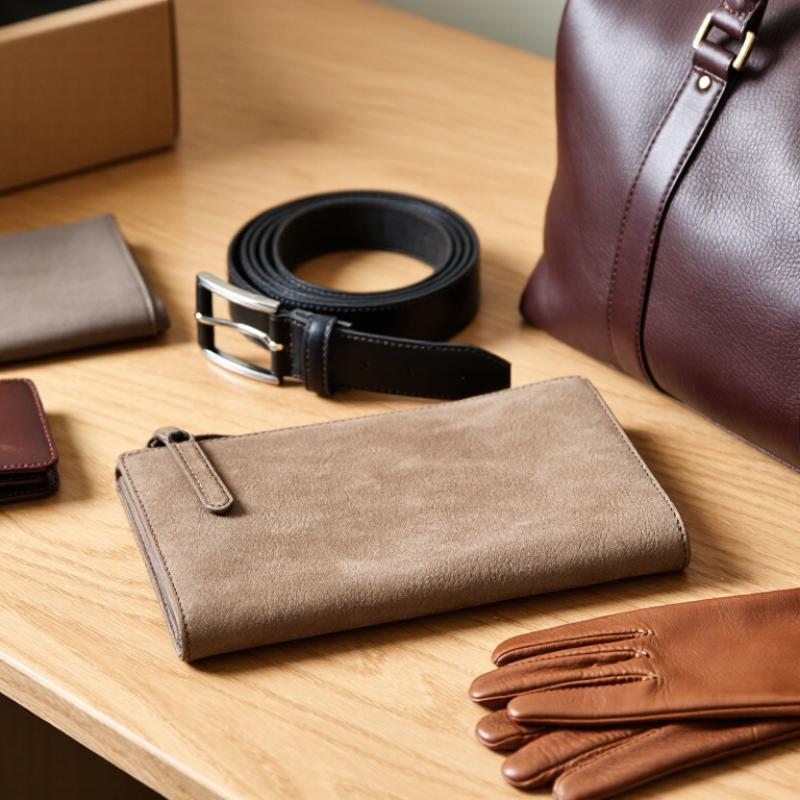
Global leather buying becomes easier when your product need is precise. Start by naming the item, customer, use, and expected selling price. A travel wallet needs different leather than a safety boot. Write down target dimensions, pocket count, edge finish, lining, hardware, and color tolerance. Small details prevent costly sampling cycles. They also help suppliers quote accurately.
Define your buying goal before discussing price. Are you testing a small collection, replacing a supplier, or planning steady production? Your goal determines order quantity, sampling budget, lead time, and acceptable variation. I usually request a physical sample, a material specification sheet, and clear measurements. Check grain, thickness, flexibility, stitching, odor, and color under daylight. Touch matters. Photos can hide surface flaws. I once approved a finish from images alone, and the delivered leather felt too stiff for daily use. That assumption was wrong. Build a simple scorecard, but leave room for practical judgment.
Reliable buyers also describe their market clearly. Mention climate, customer habits, care expectations, and packaging needs. A humid market may require different storage and moisture controls. A premium gift item may need cleaner edges and stronger presentation. Ask how materials are sourced and whether quality records can be shared. Confirm testing, production tolerances, replacement procedures, and shipment documents in writing. Do not promise zero defects. Agree on what counts as acceptable. It sounds less polished, but it is more honest. Review the first batch against the approved sample before releasing repeat orders.
Check Leather Types, Quality Grades, and Material Authenticity
Global buyers should identify leather before judging its price. Full-grain leather keeps the natural surface, while top-grain leather is lightly corrected. Corrected-grain leather receives sanding or embossing. Split leather comes from lower layers and often needs a coating. Bonded leather contains reconstituted leather fibers, while synthetic leather contains no animal hide. Leather Naturally reports that approximately 1.4 billion hides and skins enter tanning worldwide each year. Scale does not guarantee quality.
Ask for the exact material name, thickness, origin, finish, and backing structure. Rub a hidden edge gently. Genuine leather usually shows irregular fibers, not a perfectly uniform plastic layer. Examine pores under magnification. A strong chemical smell deserves questions. Do not rely on a grain pattern alone. It can be embossed. Product photos can mislead.
Quality grades are not globally standardized. Require measurable specifications, including tensile strength, tear strength, abrasion resistance, colorfastness, and flex performance. The Leather Working Group audit framework emphasizes traceability, environmental controls, and chemical management, but an audit does not automatically prove every product is genuine leather. Request batch-level documentation and independent laboratory results. The International Organization for Standardization publishes test methods for leather physical performance, yet testing can still miss inconsistent batches. That is the uncomfortable part. Inspect samples from different cartons, not only the best sample. When evidence conflicts, delay the purchase. A low price may reflect thinner splits, heavy coating, or unclear sourcing—not a genuine bargain.
Evaluate Craftsmanship, Durability, and Product Specifications
10 Leather Items Buying Tips for Global Buyers
Evaluate Craftsmanship, Durability, and Product Specifications
When buying leather bags, belts, wallets, gloves, shoes, jackets, luggage, watch straps, briefcases, or cases, inspect the material closely. Full-grain leather usually shows natural variation, while corrected leather appears more uniform. Neither choice is automatically better. The right option depends on use, budget, and required appearance.
Ask for precise specifications before placing a large order. Confirm leather thickness, lining material, hardware composition, stitching density, dimensions, weight, color tolerance, and packaging details. Product photographs can hide uneven edges or weak seams. Request close-up images and a physical sample. Rub the surface gently. Bend the item repeatedly. Check whether the finish cracks, the odor is unusually strong, or the hardware loosens.
Test durability in conditions similar to actual use. A travel case needs stronger handles than a decorative pouch. Shoe leather also requires different flexibility from belt leather. Suppliers should provide consistent inspection records, material descriptions, and production samples. Independent testing can help verify abrasion resistance, colorfastness, and seam strength when volume is significant.
I once accepted attractive photos too quickly. That shortcut caused avoidable quality discussions. I now compare samples against written specifications, though even this method is imperfect. Natural leather can vary between batches. Leave reasonable tolerance, but record every agreed detail clearly. Small omissions become expensive across hundreds of pieces.
Verify Compliance, Shipping Terms, Packaging, and After-Sales Support
10 Leather Items Buying Tips for Global Buyers
Compliance should be checked before price negotiation. Request material composition, country of origin, factory test reports, and traceability records for every leather item. Confirm chemical restrictions, labeling rules, and import documents for the destination market. The OECD Due Diligence Guidance for the Garment and Footwear Sector recommends identifying risks throughout the supply chain, not only at the final factory. Paperwork is not proof alone. Compare certificates with production details, batch numbers, and inspection photos.
Shipping terms need careful reading. Incoterms 2020 defines responsibilities, but it does not guarantee customs clearance or product quality. Ask for separate prices under EXW, FOB, CIF, or DAP terms. UNCTAD’s Review of Maritime Transport reports that more than 80% of global trade by volume moves by sea. Delays can therefore affect cash flow. Confirm carton dimensions, gross weight, port charges, insurance, and the party responsible for import duties. Small wording differences matter.
Packaging protects leather from moisture, abrasion, and shape loss. Use breathable inner wrapping, dry cartons, corner protection, and clear carton labels. The OECD Global Plastics Outlook reports that packaging created about 40% of global plastic waste in 2019. Reduce unnecessary plastic, but do not sacrifice moisture control. I once treated packaging as a minor cost. That was a poor assumption. After-sales terms should state inspection periods, acceptable defect levels, photo evidence, replacement timing, and refund procedures. A written claim process is more reliable than friendly promises.
10 Leather Items Buying Tips for Global Buyers
Checklist coverage by purchasing risk area
The chart organizes ten practical buying checks into five areas. Each value represents the number of checklist points assigned to that area, not market share or sales data.
- Product and material verification: confirm leather type, grade, dimensions, color, and finish.
- Compliance documentation: verify restricted-substance testing, labeling, country-of-origin information, and required certificates.
- Shipping terms and documents: agree on the Incoterm, delivery responsibilities, freight documents, and cargo insurance.
- Packaging and handling: define moisture protection, carton specifications, inner packing, and shipping marks.
- After-sales support: establish inspection procedures, defect-remedy rules, warranty terms, and response times.