
What Are Number Patches and How Are They Used?

Number Patches are small textile or embroidered identifiers attached to uniforms, sportswear, work jackets, bags, and team apparel. They may display a player’s number, a rank, a product code, or a meaningful date. Their purpose looks simple. Their design choices are not.

According to textile branding consultant Elena Marlowe, “A good number patch must be readable before it becomes memorable.” That principle explains why size, contrast, stitching, backing, and placement matter. A patch placed on a curved sleeve may distort slightly. A poorly chosen thread color can disappear under weak lighting. Small details create visible problems.

This guide explores what Number Patches are, how manufacturers produce them, and where people commonly use them. It also considers embroidered, woven, printed, and heat-applied options. Each type offers different levels of durability, texture, flexibility, and cost. The best choice depends on the garment, washing conditions, attachment method, and intended use.

Experience matters here. A patch that looks excellent on a sample may curl after repeated washing. That possibility is easy to underestimate. Testing remains important, even for a small order. Readers will also learn how to select fonts, borders, thread colors, and backing materials. Practical examples will make the process clearer, from a bold basketball jersey number to a discreet workplace identifier.

There is no universal patch design. Some choices work beautifully in one setting and poorly in another. Careful planning usually produces a cleaner, longer-lasting result.
What Are Number Patches and How Are They Used?

Definition and Main Features of Number Patches

A number patch is a small fabric badge displaying one or more numerals. It is usually sewn, ironed, or attached to clothing and equipment. The patch may identify a player, team member, garment size, work role, or production batch. Its purpose depends on the setting. Clear enough.

Number patches commonly feature bold digits, strong contrast, and durable stitching. Twill, embroidered thread, woven fabric, and heat-applied materials are frequent choices. Each option changes the patch’s texture, flexibility, and resistance to washing. A well-made patch should remain readable after repeated use. However, durability depends on fabric quality, attachment method, and care instructions. The number alone is not the whole design.

In practical garment work, I have found that spacing matters more than people expect. Crowded digits can look untidy from a distance. Small numbers may also lose their shape on textured fabric. Designers usually test the patch against the garment before final attachment. This simple step reveals problems with color contrast, placement, or scale. Number patches can support quick visual identification, but they are not always foolproof. Similar digits, poor lighting, or loose stitching may create confusion. A reliable design keeps the message simple, visible, and suitable for the material.

Common Materials, Shapes, Sizes, and Design Styles

What Are Number Patches and How Are They Used?

Common Materials, Shapes, Sizes, and Design Styles

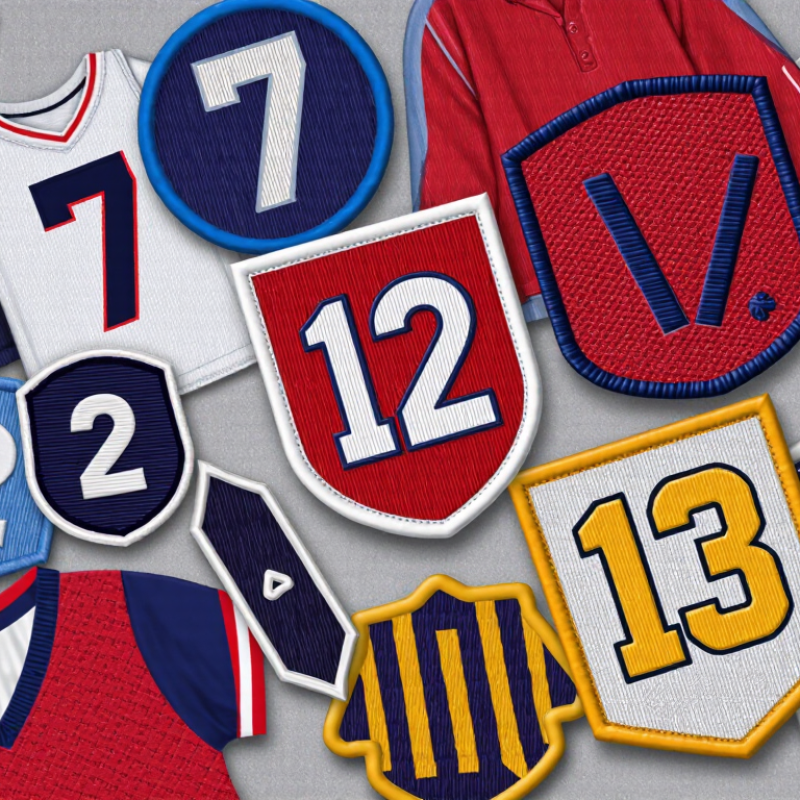
Number patches are decorative identifiers sewn or attached to clothing, bags, uniforms, and sportswear. They can show a player number, team role, year, or personal style. Common materials include embroidered thread, woven fabric, chenille, PVC, felt, and synthetic leather. Embroidery creates a textured, traditional appearance. Woven patches produce sharper small details. PVC resists moisture, while felt offers a softer, vintage impression. However, no material performs perfectly in every situation.

Shapes usually include circles, rectangles, shields, stars, and custom outlines. Rectangular patches suit names and large numbers. Circular designs work well on sleeves or caps. Typical sizes range from two to twelve centimeters, but the best size depends on the garment and viewing distance. Large patches improve visibility. Small patches look cleaner on narrow straps. Design styles may be bold, minimalist, retro, metallic, distressed, or outlined with contrasting thread. A simple number often remains easier to read than an overcrowded design.

Tips: Test the patch on spare fabric before final attachment. Check its weight, edge stiffness, and color contrast. Match the backing to the material. Sew woven or embroidered patches for frequent washing. Use heat-applied backings only when the fabric tolerates heat. I often see people choose size by appearance alone. That can fail. Measure the placement area first, then leave enough space around seams and pockets. Wash according to the patch material, because excessive heat may warp synthetic surfaces or loosen adhesive.

How Number Patches Are Made and Finished

Number patches are made through a careful sequence of design, stitching, cutting, and finishing. The process usually begins with clean artwork and confirmed measurements. A digitizer converts the number into embroidery instructions. This step controls stitch direction, density, spacing, and edge clarity. Small numbers need simpler shapes because crowded stitches can blur fine details.

The patch base may use twill, felt, canvas, or another stable fabric. The chosen material affects texture, weight, and durability. Embroidery machines then build the number layer by layer. Tension must remain consistent. Too much tension can pull the fabric inward. Too little may create loose stitches. I have found that test samples reveal problems that computer previews often miss.

After embroidery, the patch is cut into its final shape. A stitched border can cover the raw edge and improve resistance to fraying. Some patches receive a heat-seal backing, while others use hook-and-loop attachment or sewing lines. Finishing workers trim loose threads, inspect the reverse side, and check the number from a normal viewing distance. A wash test can expose weak edges or backing movement. It is not perfect every time. Dark thread may need adjustment, and dense designs can still feel stiff. Careful inspection makes the difference between a patch that merely looks finished and one that performs well on uniforms, bags, or team apparel.

Practical Uses in Sports, Uniforms, and Personalization

What Are Number Patches and How Are They Used?

Number patches are fabric or embroidered pieces featuring digits. They are attached to shirts, jackets, bags, and team uniforms. In sports, numbers help players, officials, and spectators identify participants quickly. A well-made patch should remain readable during movement, washing, and repeated use. Stitching, fabric weight, edge finishing, and color contrast all affect its performance.

Uniforms also use number patches for organization. Schools, clubs, event crews, and training groups can assign clear numbers without replacing complete garments. Personalization adds a practical and visual purpose. A player may choose a meaningful number, while a family may add numbers to matching jackets. However, a design that looks balanced on a screen can appear crowded on fabric. Small details often disappear after stitching. That part needs honest review.

Tips: Choose a simple font with open shapes. Test the patch on the actual garment first. Keep strong contrast between the digits and background. Check the sewing area for seams, pockets, and stretch. Wash one sample before ordering many pieces. It may reveal loose threads, shrinking, or fading. Also, confirm the number placement with the wearer. A centered design is not always the most comfortable choice.

Choosing, Applying, and Caring for Number Patches

What Are Number Patches and How Are They Used?

Number patches identify players, teams, classes, or event participants. They are usually made from woven, embroidered, or heat-transfer materials. The best choice depends on the garment fabric, washing routine, and desired finish. Woven patches create sharp, readable numbers. Embroidered patches feel more textured and durable. Heat-transfer numbers sit flatter, but they need careful temperature control.

Measure the placement before applying a patch. A ruler helps keep numbers level and centered. For sewn patches, use matching polyester thread and short, even stitches. Heat-transfer patches require a clean, dry surface and steady pressure. Test the adhesive on a hidden area first. Some synthetic fabrics can shine, shrink, or distort under heat. According to Textile Exchange’s 2024 Materials Market Report, global fiber production reached 124 million tonnes in 2023. Choosing durable materials and repairing garments can reduce unnecessary replacement. WRAP’s Valuing Our Clothes report found that extending clothing life by nine months may reduce carbon, water, and waste footprints by 20–30%. The figure is useful, though real results vary by garment and washing habits.

Tips: Wash patched clothing inside out. Use cool water and mild detergent. Avoid bleach and high heat. Air-dry when possible. Check loose corners after each wash. Sew them early. Do not iron directly over the number. Use a pressing cloth instead. I once underestimated fabric stretch; the patch looked centered while standing, but shifted during movement. Rechecking placement on the body would have prevented that small mistake.

What Are Number Patches and How Are They Used? - Choosing, Applying, and Caring for Number Patches

Patch Type Typical Materials Attachment Method Best Uses Durability Care Guidance
Embroidered Woven fabric base with stitched thread Sew-on, iron-on backing, or adhesive Sports clothing, uniforms, jackets, bags High when stitched; moderate with adhesive only Wash inside out and avoid high heat when an adhesive backing is used.
Woven Tightly woven polyester or similar textile Sew-on, heat-activated, or adhesive backing Detailed numbers, name panels, lightweight garments Good detail retention; depends on attachment Use a mild detergent and do not scrub directly over the patch.
Chenille Raised yarn on a felt or fabric base Primarily sewn on Varsity-style garments, sweaters, decorative apparel Good structural strength; raised surface needs protection Hand washing or gentle machine washing is preferred; air dry flat.
Rubber or PVC Flexible molded rubber-like material Sew-on, heat-press, or pressure-sensitive adhesive Outdoor clothing, workwear, bags, protective equipment High resistance to moisture and abrasion Clean with a damp cloth or follow the garment's washing instructions.
Reflective Reflective film, coated textile, or reflective thread Heat-activated or sewn application Running clothing, cycling gear, safety uniforms Moderate to high; reflective performance can decline with wear Avoid bleach, abrasive brushing, and direct ironing over the reflective surface.
Printed Fabric Printed cotton, polyester, or blended fabric Sew-on, adhesive, or heat-activated backing Custom designs, temporary uniforms, casual apparel Moderate; print may fade with repeated washing Turn the garment inside out, use cold or warm water, and limit tumble drying.

Application and Care Checklist

  • Choose a patch size that fits the garment area without covering seams, pockets, or closures.
  • Clean and dry the fabric before applying an adhesive or heat-activated patch.
  • For heat application, use the temperature and pressing time recommended for the patch and fabric.
  • Sew around the edge when the garment will experience frequent stretching, washing, or outdoor use.
  • Inspect the edges regularly and repair loose stitching before the patch begins to lift.

Article Source:

This website uses cookies to ensure you get the best experience on our website