

10 Stainless Steel Cup Buying Tips for Global Buyers

A Stainless Steel Cup can look simple on a product page: polished walls, a neat lid, and a capacity printed beside the price. For global buyers, the details behind that image matter more. Steel grade, wall construction, rim finish, and handle design affect durability and everyday comfort. A cup meant for hot coffee may need different insulation from one used for cold drinks. Small details count.

Reliable sourcing also depends on what happens before and after production. Buyers should ask for clear material specifications, sample approval, and consistent quality checks. They can compare actual capacity, weight, leak resistance, and surface finish rather than relying on photos alone. Useful questions include how the supplier handles defects, packaging, lead times, and repeat orders. Request evidence, not just promises.

There is no single best cup for every market or customer. A lightweight design may suit travel, while a wider base may feel steadier on a desk. Lid fit and cleaning access deserve practical testing. That sounds simple. It rarely is. Even a good sample may not represent every production batch, so buyers should agree on measurable requirements and keep records of approvals. Cost matters, but the lowest quote can hide trade-offs in material, finish, or service. These ten buying tips offer a grounded way to compare options, ask sharper questions, and choose a Stainless Steel Cup that fits its intended use. A little uncertainty is normal; careful checks make it easier to manage.
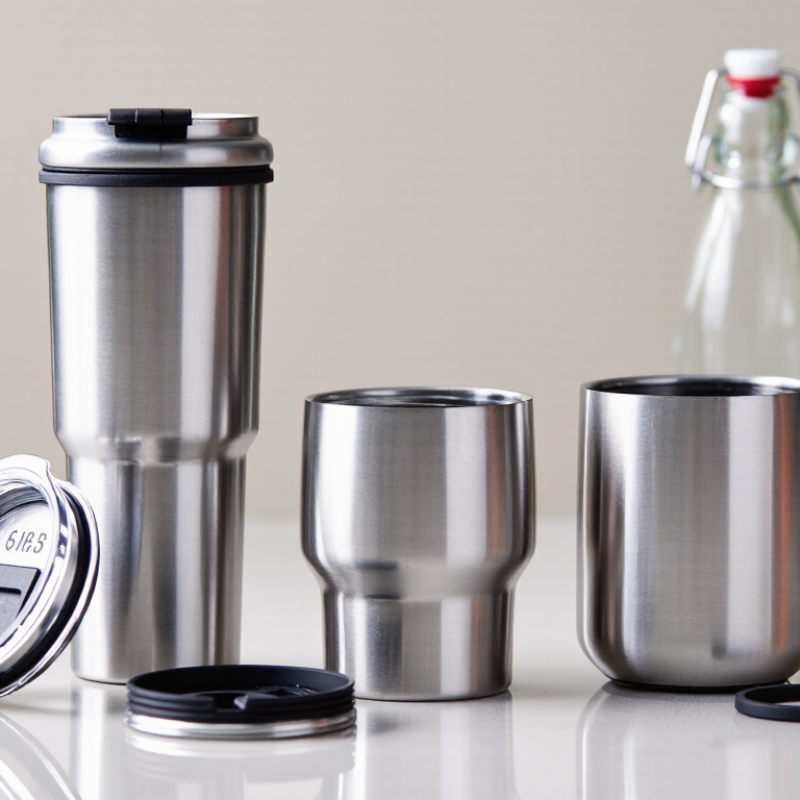
10 Stainless Steel Cup Buying Tips for Global Buyers

Understanding Stainless Steel Grades and Food-Contact Safety

A cup marked “stainless steel” still needs a grade you can verify. ASTM A240/A240M composition data lists Type 304 at 18–20% chromium and 8–10.5% nickel. Type 316 contains 16–18% chromium, 10–14% nickel, and 2–3% molybdenum. The numbers matter. Grade 316 may suit more chloride-exposed settings, but it is not automatically the better choice for every cup. Ask for a mill test certificate matching the product’s actual material, not just a catalogue description. Check the rim, inner wall, and welded seams; rough spots or discoloration deserve a closer look.

Grade alone does not prove food-contact safety. The finished cup’s surface, weld treatment, cleaning, and intended use can affect metal release. For a useful benchmark, consult the Council of Europe’s technical guide on metals and alloys in food contact, and check whether testing reflects the drink, temperature, and contact time you expect. NSF/ANSI 51 covers materials used in food equipment, but a supplier’s claim should identify the tested product and scope. Request test reports and traceable batch records. A polished sample can look reassuring; it cannot replace documents or independent testing. And, honestly, buyers sometimes overlook lids and coatings, even though these parts may contact the drink too.

Comparing Cup Construction, Insulation, Capacity, and Design

Stainless steel cup construction affects durability, cleaning, and the feel in hand. Compare single-wall and double-wall bodies, then inspect the rim, base, and handle joints. A smooth interior is easier to rinse after coffee, while exposed seams may collect residue. Ask suppliers for material specifications and sample cups, not just polished product photos. A polished sample can still mislead.

Insulation matters when cups carry hot tea through a long commute or keep water cool outdoors. Vacuum insulation often slows heat transfer, but lid fit and cup shape also affect performance. Request test results under stated conditions, including starting temperature and test duration. Capacity needs equal care: a 350-milliliter cup may hold less usable liquid once ice or headspace is included. Measure with the intended drink.

Design should suit real handling, not only a catalog image. Check whether the cup fits common cup holders, stacks securely, and opens easily with wet fingers. For export orders, confirm dimensions, packaging, and surface-finish consistency across production samples. Color coatings can scratch; bare steel may show fingerprints. There is no perfect option. I would compare the cup after repeated washing, though that test alone cannot predict every user’s experience.

Checking Certifications, Testing, and Regulatory Compliance

For global buyers, a stainless steel cup’s finish is only part of the evaluation. Check which food-contact rules apply in each destination market; requirements can differ. Ask for current certificates and test reports, then confirm the issuing laboratory, product scope, and test date. A certificate for a similar item may not cover your cup.

Testing should match the finished product, not just a sheet of steel. Ask whether the cup body, coating, printed decoration, lid, and seal were assessed where relevant. Review test conditions and results for food-contact migration and material safety. Small details matter. A report based on a different lid or coating may leave a real gap.

Compare the tested sample with the production version, including steel grade, welds, and surface treatment. Confirm that the supplier can trace batches and share updated documents when materials change. The paperwork can look complete, yet still need a closer read. A practical checklist helps, but it cannot replace checking the rules for your specific market and intended use.

10 Stainless Steel Cup Buying Tips for Global Buyers - Checking Certifications, Testing, and Regulatory Compliance
No. Buying Tip What to Check Useful Evidence or Testing Compliance Consideration
1 Confirm the stainless steel grade Specify the grade for each food-contact component, such as the cup body, rim, handle, or inner wall. Grades commonly used in drinkware include 304 and 316; suitability depends on the design, beverage, and use conditions. Request material declarations and, where appropriate, mill test certificates. Use positive material identification or laboratory chemical analysis to verify composition; XRF alone may not distinguish every grade or reliably measure carbon content. Do not treat a material grade as a food-contact approval or a guarantee of corrosion resistance in every use environment.
2 Check all parts that contact food or drink Include lids, straws, coatings, printed areas, solder or braze joints, and seals—not just the stainless steel body. Record the material and intended use of each component. Obtain a component-level material list and supporting supplier declarations. Ask for relevant test reports for plastics, elastomers, coatings, or other non-metal parts. In the EU, Regulation (EU) No 10/2011 applies to plastic food-contact materials within its scope; it does not serve as the general rule for a stainless steel body.
3 Match testing to the destination market Identify every sales market, product configuration, beverage type, temperature, and expected contact duration before ordering tests. Request a written test plan that identifies the applicable legal requirements, test methods, simulants, time, and temperature conditions. Requirements differ by country and material. A test result for one market or use condition may not demonstrate compliance for another.
4 Review food-contact documentation carefully Check that documents identify the actual product, materials, model or family, intended use, and supplier. Confirm that the evidence is current and traceable. Request a supplier declaration supported by relevant material specifications and test reports. Verify report dates, sample descriptions, methods, and results. For the EU, Regulation (EC) No 1935/2004 sets general food-contact requirements and Regulation (EC) No 2023/2006 covers good manufacturing practice. There is no single harmonized EU measure specifically covering all stainless steel food-contact articles.
5 Do not rely on a generic “FDA certificate” For US sales, determine whether each food-contact substance and component complies with the applicable FDA requirements for its intended conditions of use. Ask for the specific regulatory basis, such as an applicable regulation or effective Food Contact Notification where relevant, along with supporting supplier documentation. The FDA does not issue a universal approval certificate for stainless steel cups. A generic statement or logo alone is not proof of compliance.
6 Check migration and release testing Testing should reflect realistic and reasonably foreseeable use, including the beverage type, contact time, temperature, repeated use, and relevant components. Review reports for the tested sample, method, test conditions, analytes, detection limits, and conclusions. Test the finished article when component interactions or manufacturing processes could affect results. There is no single migration test that establishes worldwide compliance. Use the methods and limits applicable to the destination market and product use.
7 Verify the laboratory and report scope Check who performed the testing and whether the laboratory is competent for the relevant methods and materials. Prefer reports from a laboratory accredited to ISO/IEC 17025 for the specific test method where available. Confirm that the method appears within the laboratory’s accreditation scope. Laboratory accreditation supports confidence in testing competence; it does not itself certify the product or replace the buyer’s compliance review.
8 Assess corrosion resistance and surface quality Inspect for burrs, cracks, pitting, rough welds, residue, and damaged or poorly finished surfaces. Consider whether the product is intended for acidic or salty beverages and repeated washing. Set measurable inspection criteria and use suitable corrosion or passivation tests when justified by the material, process, and intended use. Review the test method and acceptance criteria. A passivation or corrosion test is a product-quality check, not a universal food-contact certification. Results depend on the test conditions and acceptance criteria.
9 Check labeling and product claims Review capacity, care instructions, material claims, warnings, and claims such as “dishwasher-safe,” “leakproof,” or “vacuum insulated.” Confirm that claims match the finished product. Keep substantiation for performance claims, such as appropriately designed dishwasher-cycle or leak tests, and retain approved artwork and labeling records. Labeling rules vary by market. Do not present “food-grade,” “FDA approved,” or similar wording as a certification unless the claim is accurate and supported for the specific product and jurisdiction.
10 Maintain traceability and change control Link production lots to material records, suppliers, test reports, and final product specifications. Define which changes require review before shipment. Request lot or batch identification, inspection records, and advance notification of changes to steel grade, component supplier, coating, process, or manufacturing site. Reassess compliance when a change could affect food-contact safety or product claims. For EU sales, also assess applicable obligations under REACH and general product-safety rules for the product and supply chain.

Evaluating Manufacturers, Samples, and Quality-Control Systems

A stainless steel cup can look flawless in a product photo and still disappoint in daily use. Evaluate the manufacturer’s process, not only its catalogue. Ask how steel grades are identified and how incoming material is checked. Request clear details about forming, welding, polishing, and surface finishing. Small details matter. Uneven rims, rough seams, or loose lids can signal weak process control.

Order samples before discussing a large production run. Check the cup’s weight, balance, rim smoothness, and lid fit by hand. Pour in hot water, then inspect the outside for unexpected heat or condensation. Wash the sample several times and look for stains, odor, or changes in finish. A sample can still flatter. It may come from a carefully selected batch, so ask whether it represents normal production. Keep one approved sample as a reference for later orders.

Review the supplier’s quality-control system and ask for specific records, not broad promises. These may include material inspection results, production checks, defect limits, and final inspection reports. Ask who checks each stage and how rejected cups are handled. Request photos or a short video of the actual inspection area if an on-site visit is not practical. A neat report is useful, but it cannot replace consistent checks. I would also clarify what happens when a shipment differs from the approved sample; buyers sometimes leave this awkward question too late.

Comparing Pricing, Packaging, Shipping, and After-Sales Support

When comparing stainless steel cup quotes, look beyond the unit price. Ask suppliers to separate cup costs, printing, sample fees, and packaging charges. A low quote can exclude individual sleeves or export cartons, which may change the final landed cost. Check the quoted steel grade, capacity, finish, and lid inclusion so you compare equivalent products. Small details matter.

Packaging affects both protection and freight. Request carton dimensions, units per carton, and photos of the inner packing. A cup with a polished surface may need a divider or protective film to prevent scratches during transit. Too much packaging adds weight and volume, though. Ask whether carton markings can match your warehouse requirements, and approve a sample pack before production if the order is large.

Shipping estimates should specify the transport method, dispatch window, destination charges, and quote validity. Freight rates can shift, especially when cartons take up more space than expected. Confirm who handles damage claims and what records are needed, such as delivery photos or carton counts. After-sales support deserves the same scrutiny: request a written process for defects, replacement parts, and response times. One point buyers sometimes miss is whether support continues after the first shipment. I would verify that in writing, even when the supplier seems responsive.

This website uses cookies to ensure you get the best experience on our website