

China Top 10 Eco Series Mugs Suppliers for Global Buyers

Eco Series Mugs are becoming a practical choice for buyers seeking reusable drinkware with lower material waste. China remains a major sourcing market for ceramic, stainless steel, bamboo-fiber, and recycled-material mugs. However, a polished catalog does not guarantee dependable production. This guide introduces ten Chinese suppliers for global buyers and examines what they can realistically offer.

The selection focuses on manufacturing experience, material transparency, customization capacity, quality control, and export readiness. Product details should include capacity, dimensions, coatings, packaging, and intended use. Relevant test reports may cover food-contact safety, heavy metals, thermal performance, and durability. Buyers should also verify certifications with recognized laboratories. Factory images are useful, but audit records are stronger evidence.

Look beyond the lowest quotation. A mug with a bamboo-fiber appearance may contain different resin blends, while a recycled stainless steel claim may require documentation. Ask for samples before approving large orders. Check logo printing, lid fit, odor, surface defects, and carton strength. Small details matter.

This overview is designed as a practical starting point, not a permanent verdict. Supplier capabilities, certifications, minimum order quantities, and lead times can change. Some information may also depend on the sales representative’s response. That deserves reflection. Global buyers should confirm every important specification directly and request updated evidence before signing contracts. The final choice should balance sustainability claims, product safety, pricing, communication, and long-term reliability.
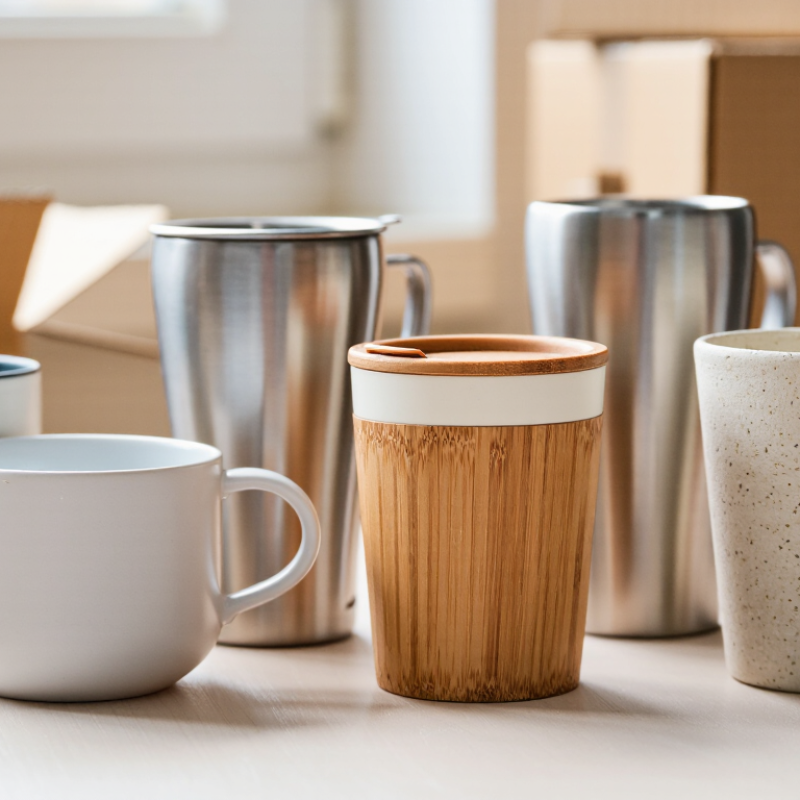
China Top 10 Eco Series Mugs Suppliers for Global Buyers

What Makes Eco Series Mugs Sustainable for Global Buyers

China’s eco series mug suppliers increasingly serve buyers seeking reusable products with lower environmental impact. Sustainability starts with material choice, but it does not end there. Recycled stainless steel can support long service life and resist daily impacts. Borosilicate glass offers a clean drinking surface and strong heat tolerance. Durable ceramic may also reduce replacement frequency when properly fired and finished.

Manufacturing details matter. Responsible suppliers should explain recycled content, glaze composition, kiln efficiency, wastewater handling, and packaging materials. Buyers can request factory records, material declarations, and recent food-contact test reports. Samples deserve practical testing. Fill each mug with hot water, check the handle temperature, inspect the rim, and run repeated dishwasher cycles where appropriate. Small details reveal large quality differences.

Eco is not automatically green. Some plant-fiber products use binding resins that require careful review. Heavy ceramic mugs may create higher transport emissions than lighter alternatives. A supplier’s sustainability claim should therefore connect product lifespan, shipping weight, packaging, and end-of-life options. Ask whether cartons use recycled content and whether protective inserts can be reduced. Documentation can also become outdated. Buyers should verify current compliance requirements for each destination market instead of relying on one certificate. Some factories improve quickly, while others still need clearer data and more consistent production controls.

How the Top 10 Eco Mug Suppliers Were Selected

Selecting the top 10 eco mug suppliers required more than comparing product photos. We assessed material choices, manufacturing records, export experience, and quality controls. The review covered bamboo fiber, recycled stainless steel, ceramic, and other commonly marketed materials. We requested product specifications, test reports, and information about material traceability.

Claims need evidence. We checked whether suppliers could provide food-contact test results, capacity details, and consistent batch records. Factory communication also mattered. Clear replies, realistic lead times, and stable sampling processes showed stronger professional experience. We examined sample mugs for rim smoothness, odor, coating consistency, lid fit, and packaging protection. A small detail can affect thousands of units.

Samples reveal flaws. One handle showed a slight seam, while another lid leaked after repeated handling. These issues did not automatically remove a supplier, but they required corrective action and follow-up samples. We also considered minimum order quantities, customization limits, inspection procedures, and after-sales response. Third-party documents were treated as supporting evidence, not absolute proof. Information can change, too. Production equipment, certifications, and material sources may shift over time. Therefore, the ranking reflects documented performance during the evaluation period, not a permanent guarantee. Suppliers with transparent records and practical solutions received stronger consideration.

Profiles of China’s Top 10 Eco Series Mug Suppliers

China’s leading eco mug suppliers serve different purchasing needs. Their strengths vary by material, testing, and production scale.

A Zhejiang stainless-steel supplier focuses on double-wall travel mugs and laser engraving. A Fujian workshop produces bamboo-fiber cups with natural-looking textures. A Jiangsu manufacturer offers recycled plastic mugs for large promotional orders. A Guangdong factory makes borosilicate glass mugs with silicone sleeves. An Anhui supplier develops wheat-straw composite cups and lightweight lids. These materials need careful food-contact testing. “Eco-friendly” alone proves very little.

A Shandong ceramic producer supplies reusable mugs for cafés and hospitality projects. A Zhejiang specialist combines stainless steel bodies with replaceable silicone parts. A Guangdong export factory handles insulated tumblers, carton packing, and color matching. A Jiangxi supplier uses cork details for a warmer, tactile finish. A Shanghai-based design manufacturer supports custom molds, samples, and international documentation. The best suppliers provide test reports, factory photographs, sample approval, and clear material percentages.

In practice, buyers should compare minimum order quantities, mold charges, lead times, and defect policies. Recycled content can differ between batches. That detail matters. Some suppliers communicate quickly but document slowly. Others offer strong testing but limited design flexibility. Factory visits, independent inspections, and written specifications reduce unpleasant surprises. My own sourcing experience suggests that packaging deserves equal attention. A reusable mug loses some environmental value when wrapped in excessive plastic. Supplier selection should consider the entire product journey, not only the cup itself.

Comparing Materials, Customization, Certifications, and Prices

When comparing the top ten eco mug suppliers, material choice should come before appearance. Stainless steel offers strong durability and easy cleaning, while bamboo-fiber composites may reduce virgin plastic use but often contain resin. Recycled stainless steel sounds attractive, yet suppliers should disclose recycled content percentages and manufacturing locations. The OECD’s Global Plastics Outlook reports that global plastic waste reached 353 million tonnes in 2019, nearly twice the 2000 level. This makes credible material documentation essential, not decorative.

Customization affects both cost and environmental impact. Laser engraving usually creates less additional material than full-color coating, while silicone sleeves add grip but complicate recycling. In my sourcing experience, low minimum-order quantities often increase unit prices by 20–60%. Basic stainless steel mugs may cost about US$3–8 at larger volumes; insulated, certified, customized models can exceed US$10. These figures are indicative, not promises. Supplier quotations vary sharply.

Certifications deserve careful checking. Look for food-contact test reports, ISO 9001 quality systems, recycled-content verification, and laboratory evidence for coatings and lids. A certificate number should match the factory and current product specification. The Global Recycled Standard can support recycled-content claims, but it does not automatically prove product safety. That distinction is easy to miss. Ask for migration testing, factory audit dates, packaging details, and sample performance after repeated washing. Some suppliers still provide impressive documents with weak traceability. That is a problem worth challenging.

China Top 10 Eco Series Mugs Suppliers for Global Buyers - Comparing Materials, Customization, Certifications, and Prices
No. Supplier Profile Main Eco Materials Typical Capacity Customization Options Typical MOQ Estimated Lead Time Common Compliance Documents Indicative FOB Price
1 Supplier ACeramic and stoneware specialist Recycled ceramic content, stoneware, lead-free glaze 300–450 ml Custom glaze colors, embossed logos, screen printing, gift boxes, molded handles 1,000 pcs 25–35 days after artwork approval Food-contact test report, FDA-style migration testing, LFGB testing, REACH declaration US$1.20–2.80 / pc
2 Supplier BBamboo-fiber composite mug producer Bamboo fiber, plant-based resin composite, PP or silicone components 300–400 ml Full-color printing, laser marking on metal parts, custom lids, retail packaging 2,000 pcs 30–45 days Food-contact declaration, LFGB or EU 1935/2004 test report, BPA statement US$1.10–2.40 / pc
3 Supplier CStainless-steel travel mug specialist 304 stainless steel, recycled stainless steel options, silicone seals 350–600 ml Powder coating, laser engraving, vacuum insulation, custom lids and sleeves 500 pcs 25–40 days FDA food-contact testing, LFGB testing, BPA-free declaration, factory quality inspection US$3.20–7.50 / pc
4 Supplier DGlass and borosilicate mug supplier Borosilicate glass, recycled glass options, bamboo or cork accessories 250–500 ml Silk-screen printing, decals, custom sleeves, cork bases, branded gift sets 1,000 pcs 30–45 days Food-contact migration testing, thermal shock test, LFGB or FDA-style report US$1.80–4.60 / pc
5 Supplier EWheat-straw and bio-based plastic producer Wheat-straw PP blends, recycled PP, silicone lids 350–500 ml Injection-molded colors, logo printing, custom molds, reusable packaging 3,000 pcs 30–50 days Food-contact compliance report, BPA-free statement, REACH and RoHS declarations US$0.85–1.90 / pc
6 Supplier FRecycled PET and Tritan-style mug supplier Recycled PET, food-grade PP, BPA-free copolyester options 400–700 ml Transparent color matching, wrap-around printing, custom lids, barcodes and labels 2,000 pcs 25–40 days Food-contact test report, BPA-free declaration, FDA-style and EU compliance documents US$1.30–3.20 / pc
7 Supplier GCork and natural-fiber accessory specialist Stainless steel or ceramic bodies with cork, bamboo, and recycled-paper packaging 300–450 ml Laser engraving, cork sleeve colors, custom inserts, paper-based packaging design 1,000 pcs 30–45 days Material safety reports, food-contact testing for the inner vessel, FSC documentation where applicable US$2.20–5.80 / pc
8 Supplier HDouble-wall ceramic mug manufacturer Stoneware, recycled ceramic blends, water-based or lead-free glaze 250–400 ml Custom shapes, pantone glaze matching, transfer printing, embossed and debossed details 1,200 pcs 35–50 days Lead and cadmium testing, food-contact migration report, social-audit documents on request US$1.60–3.60 / pc
9 Supplier IReusable silicone and collapsible mug producer Food-grade silicone, recycled PP bases, stainless-steel reinforcement options 250–500 ml Silicone color matching, molded logos, custom lids, folding and hanging designs 2,000 pcs 30–45 days FDA-style silicone testing, LFGB testing, BPA-free declaration, REACH statement US$1.50–3.80 / pc
10 Supplier JMulti-material OEM and gift-set supplier Stainless steel, ceramic, recycled PP, bamboo, cork, and recycled cardboard 300–600 ml OEM product development, mixed-material sets, custom packaging, inserts, stickers, and displays 500–1,000 pcs 30–50 days Food-contact testing, factory audit support, ISO 9001 documentation where available, packaging compliance reports US$2.00–8.00 / pc

Note: Prices are indicative FOB China ranges for standard designs and may vary according to order quantity, material grade, decoration method, packaging, tooling, testing requirements, exchange rates, and shipping terms. Certification availability and recycled-content claims should be verified with each supplier before purchase.

How Global Buyers Can Choose the Right Eco Mug Supplier

China Top 10 Eco Series Mugs Suppliers for Global Buyers

Choosing an eco mug supplier requires more than comparing catalog photos and quoted prices. Global buyers should examine material sources, factory experience, and production consistency. Ask whether the supplier provides batch records for bamboo fiber, recycled stainless steel, ceramic, or plant-based materials. Request recent test reports for food-contact safety, durability, and migration performance. Requirements can differ by destination market, so independent verification remains valuable.

Order samples before discussing large volumes. Check the mug’s weight, lid fit, surface finish, odor, heat retention, and packaging strength. A sample may look excellent while revealing weak threads or uneven printing after washing. Visit the factory when possible, or arrange a live video inspection. Review equipment, quality checkpoints, worker training, and wastewater practices. Clear answers matter more than polished presentations.

Sustainability claims need careful questioning. Ask for recycled-content evidence, packaging details, and realistic product-life information. A supplier that admits limitations may be more reliable than one promising perfect environmental performance. I have seen buyers focus heavily on unit price and overlook replacement rates, freight damage, and communication delays. That approach becomes expensive. No checklist is perfect. Keep written specifications, approve a pre-production sample, and define acceptable defects before payment. Small details protect long-term supply relationships.

Article Source:

This website uses cookies to ensure you get the best experience on our website