


10 Best Anime Character Plush Suppliers for Global Buyers
The global market for character merchandise is expanding, but supplier selection remains surprisingly uneven. Licensing International’s 2024 Global Licensing Industry Study valued worldwide licensed merchandise and services at $356.5 billion in 2023. Entertainment and character products represented $149.8 billion. These figures show strong demand for Anime Character Plush, especially among collectors, retailers, and online sellers.
Richard Gottlieb, CEO of Global Toy Experts, has said, “A successful toy must create an emotional connection before it creates a sale.” That principle matters here. A plush character should feel soft, recognizable, and durable in a buyer’s hands. Stitch quality, embroidery accuracy, filling density, and packaging details can decide repeat orders. They also reveal a supplier’s practical experience.
This guide examines 10 Anime Character Plush suppliers serving global buyers. It considers factory capability, minimum order quantities, sample processes, customization, communication, and production consistency. Safety documentation also matters, including material testing and age-appropriate labeling. Licensed designs require careful authorization. Buyers should verify ownership before placing bulk orders.
A polished supplier list can still mislead. Product photos may hide loose seams or inconsistent colors. Therefore, each supplier deserves independent checking through samples, audit records, and clear contracts. No ranking remains perfect forever. Costs, lead times, and quality can change between orders. This guide offers a useful starting point, not a substitute for direct verification.
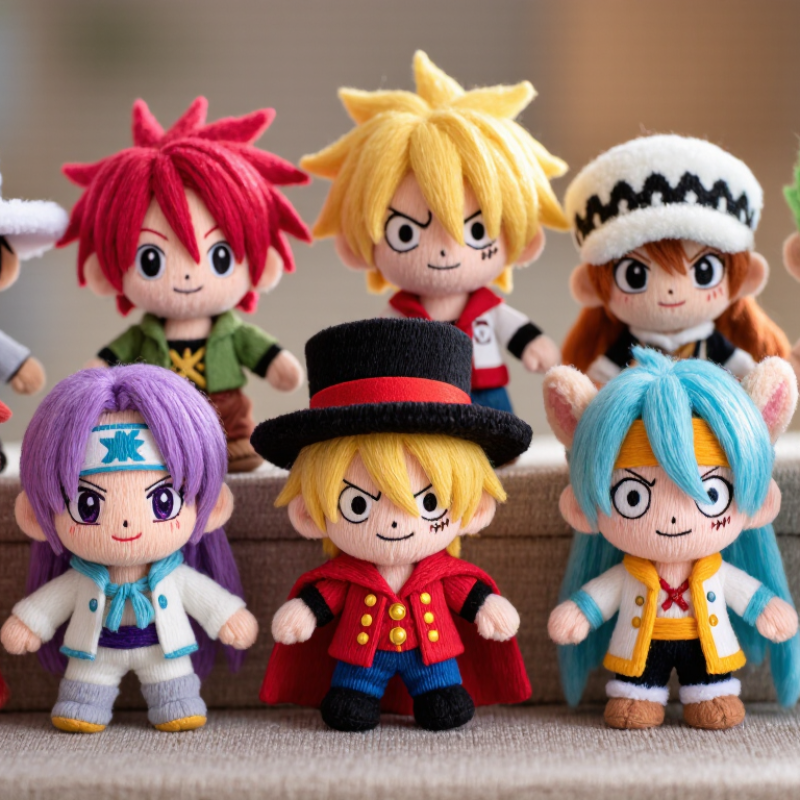
Table of Contents [Hide]
What Makes an Anime Character Plush Supplier a Global Buyer’s Best Choice
Global buyers need more than attractive character designs. A reliable anime character plush supplier combines production experience, clear communication, and documented quality control. The best choice is not always the cheapest. It is the supplier that reduces surprises across sampling, manufacturing, and delivery.
A professional supplier should provide a physical sample before bulk production. Buyers can inspect soft fabric, filling density, embroidery, seams, and facial proportions. Small details matter. A crooked mouth can change the entire character impression. Suppliers should also explain material specifications, safety testing, packaging methods, and production timelines in clear English. Honest answers are more valuable than impressive promises.
Strong export experience supports smoother international orders. Look for organized quality records, stable factory capacity, transparent minimum quantities, and accurate shipping documents. A capable supplier should respect licensed artwork or buyer-owned designs and avoid unclear character ownership. Communication should continue after the deposit, especially when colors or packaging need correction. No supplier is perfect. Even careful teams may miss a loose thread or slight color difference. That is why inspection checkpoints, approval samples, and written agreements remain essential. A thoughtful buyer should compare service, risk control, and consistency, not only unit price.
| Rank | Supplier Profile | Typical Production Base | Production Model | Typical MOQ | Sample Lead Time | Bulk Lead Time | Customization Strength | Common Compliance Documentation | Best Buyer Fit | Buyer-Choice Score |
|---|---|---|---|---|---|---|---|---|---|---|
| 1 | Profile A | East Asia | OEM and ODM plush production | 300–1,000 units per design | 7–14 days | 30–50 days after approval | Custom character shapes Embroidery Printed details | Material test reports, factory audit records, age-grade testing where required | Global retailers and licensed-style product developers | 9.4/10 |
| 2 | Profile B | Southeast Asia | Export-oriented cut-and-sew manufacturing | 500–1,500 units per design | 10–18 days | 35–60 days after approval | Soft plush fabrics Multiple sizes Custom packaging | Fiber composition records, product safety test reports, social-compliance documentation | Importers seeking diversified Asian production | 9.1/10 |
| 3 | Profile C | South Asia | Hand-finished plush manufacturing | 250–800 units per design | 10–20 days | 40–70 days after approval | Detailed embroidery Small-batch work Artisan finishing | Fabric specifications, colorfastness reports, pre-shipment inspection records | Independent artists and boutique online stores | 8.8/10 |
| 4 | Profile D | Eastern Europe | Short-run and regional production | 100–500 units per design | 7–14 days | 25–45 days after approval | Low-volume orders Rapid sampling Custom labels | EU-market product files, textile declarations, applicable toy-safety documentation | European crowdfunding campaigns and specialty shops | 8.6/10 |
| 5 | Profile E | Latin America | Regional OEM production | 300–1,000 units per design | 10–18 days | 35–65 days after approval | Localized packaging Custom hangtags Basic character forms | Material declarations, quality-control checklists, shipment inspection reports | Buyers serving Latin American retail channels | 8.3/10 |
| 6 | Profile F | North America | Domestic design coordination with outsourced production | 500–2,000 units per design | 14–25 days | 45–80 days after approval | Design development Packaging systems Retail preparation | Product specifications, third-party laboratory reports, packaging compliance files | Large e-commerce sellers and chain-store buyers | 8.2/10 |
| 7 | Profile G | Middle East and North Africa | Custom promotional plush production | 500–2,500 units per design | 12–21 days | 40–75 days after approval | Logo embroidery Event merchandise Bulk packing | Material safety declarations, carton specifications, pre-shipment quality reports | Event organizers, distributors, and promotional buyers | 7.9/10 |
| 8 | Profile H | South Asia | Handmade and semi-automated production | 100–600 units per design | 14–28 days | 45–90 days after approval | Unique textures Hand stitching Small collections | Material composition records, workmanship inspection reports, packaging declarations | Gift shops and limited-edition merchandise sellers | 7.8/10 |
| 9 | Profile I | Western Europe | Design-led private-label production | 300–1,200 units per design | 14–24 days | 40–75 days after approval | Premium fabrics Prototype refinement Sustainable packaging | Traceability records, textile documentation, applicable regional safety files | Premium concept stores and design-focused retailers | 7.7/10 |
| 10 | Profile J | Multi-region sourcing network | Brokered OEM sourcing and quality coordination | 500–3,000 units per design | 14–30 days | 45–90 days after approval | Supplier matching Multi-country sourcing Logistics coordination | Factory documentation, third-party inspection reports, shipment records | Global buyers prioritizing sourcing flexibility | 7.6/10 |
Buyer guidance: The figures above are practical industry benchmark ranges for anonymous supplier profiles, not claims about any specific company. Before placing an order, confirm the exact MOQ, lead time, safety requirements, intellectual-property authorization, inspection process, payment terms, and shipping responsibilities in writing.