Top Biomass Leather Manufacturers in China
Interest in Biomass Leather is growing as brands look for alternatives to conventional leather. China has a varied materials and manufacturing base, but the label alone says little about a product’s actual composition. Some materials use plant-based inputs alongside synthetic binders, coatings, or textile backings. That distinction matters.
A useful supplier review starts with specifics. Ask what biomass feedstock is used, how much is present, and which layers contain it. Request current technical data, product samples, and test results relevant to the intended use. Check whether a manufacturer can explain its production process, quality controls, customization options, and order capacity. Ask for proof. Clear documentation is more useful than broad sustainability language.
This overview of top Biomass Leather manufacturers in China is intended to help buyers compare suppliers with practical questions, not to treat a ranking as a guarantee. Product performance can differ by finish, thickness, backing, and production batch. Details can vary. A sample that bends well in hand may still need testing for abrasion, color transfer, or bonding in the finished application. The category is not always tidy, and supplier claims may use different definitions of “bio-based.” Buyers should confirm the details directly and assess evidence against their own product requirements. That extra step takes time, but it can prevent costly surprises.
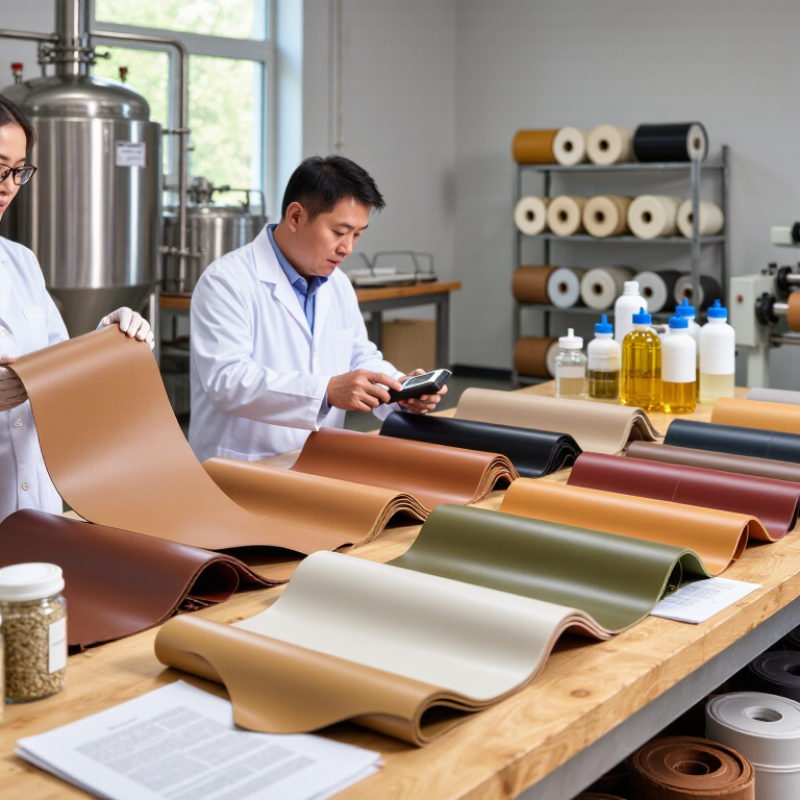
Biomass Leather: Definition, Materials, and Key Properties
Biomass leather is a leather-like sheet made partly from biological materials rather than relying entirely on conventional animal hide or fossil-based plastics. Feedstocks may include fruit-processing residues, plant fibers, agricultural waste, or fungal mycelium. The biomass is usually combined with binders, coatings, and backing fabrics to create a usable surface. The label can be fuzzy. A product described as bio-based may still contain substantial synthetic components.
Its properties depend on the recipe and construction. A finished sheet may feel soft and slightly warm, with a fine grain or a subtly uneven texture. Some versions bend easily around a small sample card; others feel firmer or show creasing after repeated folding. Water resistance, abrasion performance, breathability, and colorfastness also vary. Ask for test results and inspect samples under ordinary lighting. A smooth surface alone proves little.
For manufacturers, consistent sourcing and careful process control matter. Moisture, fiber size, coating thickness, and curing conditions can all affect the final material. A handbag panel, for example, needs different flexibility from an upholstery surface. Biomass content does not automatically mean a product is compostable or fully biodegradable. That distinction is easy to miss. Buyers should check the material composition, care guidance, and durability data before comparing options. Some specifications remain difficult to compare across suppliers.
Biomass Leather: Typical Lignocellulosic Feedstock Composition
Plant-based inputs used in bio-based materials can contain cellulose, hemicellulose, and lignin. Their proportions vary by feedstock and are not a recipe or specification for finished biomass leather.
Indicative ranges for lignocellulosic biomass, expressed as percentage of dry mass; actual composition depends on the plant source and processing.
How Biomass Leather Is Made
Biomass leather begins with plant-based material, such as agricultural residues, fruit waste, or cultivated fungal fibers. The exact recipe depends on the source. It starts with sorting. Workers remove dirt and unsuitable pieces, then wash and dry the usable material. Drying matters: excess moisture can affect later bonding and create uneven sheets.
The prepared biomass is ground, pulped, or processed into fibers, depending on its structure. These particles are mixed with binders and other ingredients to form a workable layer. Some materials use mostly biomass; others rely on synthetic binders or coatings for flexibility and wear resistance. The label alone does not reveal the full composition. That deserves a closer look.
Next, the mixture is spread onto a textile backing, pressed, and dried under controlled heat. Surface embossing can add a grain-like texture, while finishing layers help resist stains and abrasion. Quality checks may examine thickness, tear strength, color consistency, and flexibility after repeated bending. Small changes in moisture or coating weight can alter the feel noticeably. The process is not perfectly uniform, and “plant-based” does not automatically mean fully biodegradable. Manufacturers need to verify each layer and test the finished material in its intended use.
How to Evaluate Biomass Leather Manufacturers in China
When evaluating biomass leather manufacturers in China, ask what feedstock enters the material and how much is genuinely bio-based. Request a clear breakdown, not just phrases such as “plant-derived.” Review technical sheets, test methods, and batch records together. A percentage needs context. Check whether it refers to the finished material or only one ingredient. Ask how the feedstock is sourced and whether supply can remain consistent across orders. Vague answers deserve follow-up. A polished sample alone cannot verify composition or production capacity.
Test samples under conditions close to your intended use. Rub a swatch repeatedly, flex it around a tight curve, and inspect seams after stitching. Check thickness, odor, color consistency, and surface cracking across several pieces. Ask for results on abrasion, hydrolysis, and aging, with test conditions stated. Compare samples from different production batches when possible. I would not treat one test as decisive. Small trials can reveal issues, though they may not predict every production run. Discuss minimum order quantities, lead times, defect handling, and available customization in writing. A careful supplier should explain limitations as clearly as strengths.
Leading Biomass Leather Manufacturers in China
China’s leading biomass leather manufacturers are best judged by more than production capacity. Their strengths often lie in turning plant-based residues, such as agricultural fibers, into usable material through careful formulation and process control. Buyers should ask what percentage of the finished sheet comes from biomass, what binders and coatings are used, and whether those details are documented. Clear answers matter.
A capable supplier can provide samples, technical data, and repeatable specifications for thickness, color, flexibility, and surface finish. Inspect the material under practical conditions: bend it around a small radius, rub the surface with a damp cloth, and compare several sheets from one batch. Request test methods and results rather than relying on broad claims about durability or sustainability. Small differences show.
Manufacturers may also support custom colors, embossing, and roll widths for furniture, bags, or interior panels. Yet customization can increase lead time, and a promising sample may not match later production exactly. That is worth checking early. Ask how the factory tracks batch variation, handles rejected material, and verifies performance after finishing. A careful comparison of composition, testing, and production consistency gives buyers a more reliable basis for selecting a Chinese biomass leather partner.
Applications, Certifications, and Industry Trends
Biomass-based leather materials are finding practical use in footwear uppers, handbags, furniture panels, and vehicle interiors. In China, manufacturers may combine agricultural residues or plant oils with polymer coatings and textile backings. The result can look like leather, but its composition varies widely. “Bio-based” does not automatically mean fully plant-derived, recyclable, or biodegradable.
Textile Exchange’s Materials Market Report 2024 estimates that global fibre production reached 124 million tonnes in 2023, highlighting the scale of pressure to develop lower-impact materials. This figure covers fibres broadly, not biomass leather specifically. For buyers, useful evidence includes independently verified bio-based content, abrasion and hydrolysis test results, and clear disclosure of coatings. ISO 14040/14044 can guide life-cycle assessment, while ISO 14001 concerns environmental management systems; neither alone proves a product’s overall environmental benefit. Details matter. A supplier’s sample may also perform differently after prolonged heat, moisture, or flexing.
Tips: Request a material breakdown and recent third-party test reports. Check the exact product grade, not just the factory’s general certificates. Ask about repair and end-of-life options, too. Claims can sound neat; real-world disposal is often less clear.