What Are the Top Leather Handbag Types for Global Buyers?
Global buyers are reshaping demand for Leather Handbags. Bain & Company and Altagamma valued the global personal luxury goods market at approximately €363 billion in 2024. The market remained resilient, despite cautious consumer spending and uneven regional growth. Handbags still attract attention because they combine function, craftsmanship, and visible brand identity.
Coco Chanel famously said, “Luxury must be comfortable, otherwise it is not luxury.” Her words remain relevant. A structured top-handle bag may suit formal business settings, while a lightweight crossbody supports crowded city travel. Totes offer practical capacity, and shoulder bags provide easier daily access. Mini bags look distinctive, but their limited space can disappoint buyers. Small detail, big consequence.
Deloitte’s Global Powers of Luxury Goods research continues to highlight brand strength, customer experience, and product quality as major competitive factors. Meanwhile, McKinsey reports that the secondhand fashion and luxury market could reach about $350 billion by 2027. This growth makes durability, repairability, and resale value more important than decoration alone. Buyers increasingly inspect stitching, hardware weight, leather grain, lining, and origin information before placing orders.
Yet, no single handbag type suits every market. Climate, commuting habits, dress codes, income levels, and local preferences all matter. That is where this topic becomes less straightforward. A popular silhouette can still perform poorly in another region. This guide examines the leading Leather Handbags categories, comparing their practical uses, design strengths, and commercial potential for global buyers.
Global Market Scope: Handbags Reached US$57 Billion in 2023 (Grand View Research)
The global handbag market reached about US$57 billion in 2023, according to Grand View Research. That scale changes how buyers assess leather bags.
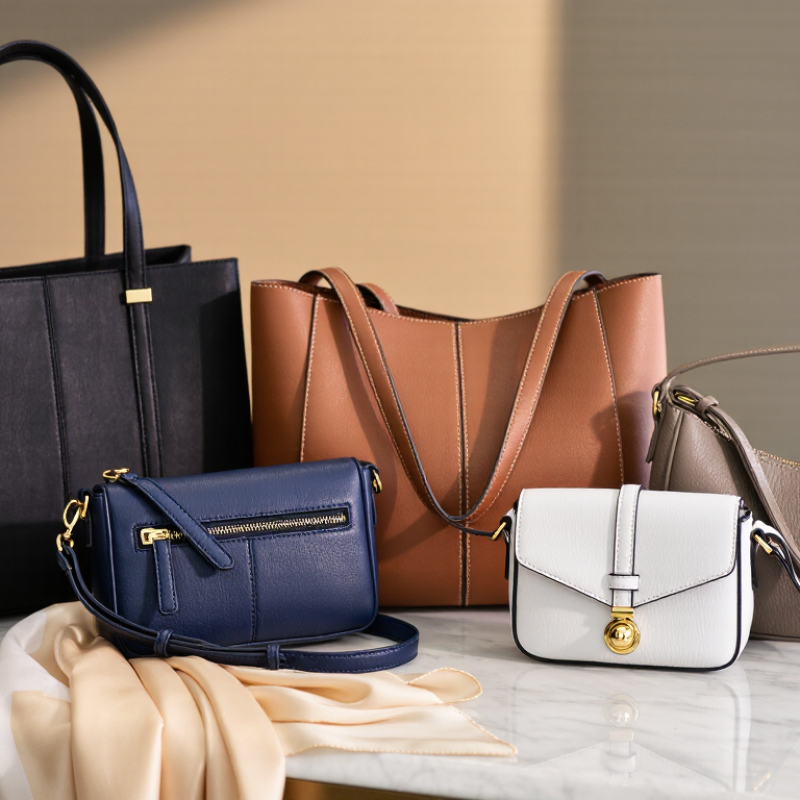
A practical tote suits office routines, while a crossbody supports commuting and travel.
Shoulder bags offer flexible styling. Satchels provide structure, but they may feel heavy after several hours.
Smaller clutches remain useful for formal events, though their capacity is limited.
Grand View Research expects continued market growth through 2030, supported by rising disposable income and online retail access. McKinsey’s State of Fashion reports also highlight stronger consumer interest in value, durability, and responsible production.
Buyers should inspect leather grain, edge painting, lining strength, and hardware finishing.
The test is simple. Open and close the zipper repeatedly. Check whether the handle keeps its shape.
A smooth surface is not always better; corrected leather can hide useful texture.
For global sourcing, specifications matter more than attractive photographs. A medium tote might need reinforced handles, stable stitching, and enough depth for a laptop. A travel crossbody should include an adjustable strap and secure internal pockets.
Leather performance can be assessed through recognized tests for tear strength, flexing, color transfer, and abrasion resistance.
Still, reports cannot predict every customer preference. Climate, body size, and carrying habits vary widely.
My own purchasing mistake was treating heavier leather as automatically superior.
It increased shipping weight without improving daily comfort.
Tote Bags: High-Capacity Essentials for Work and Travel Buyers
Tote bags remain practical leather handbag choices for global work and travel buyers. Their open structure accommodates laptops, documents, chargers, and a light jacket. Capacity matters. A useful work tote should fit a 13- or 16-inch laptop without forcing the top edges apart. Reinforced handles, a stable base, and a secure inner pocket improve daily handling.
Grand View Research valued the global leather goods market at USD 468.49 billion in 2023. It projects a 6.9% compound annual growth rate from 2024 to 2030. This wider category includes handbags, luggage, and accessories. McKinsey’s State of Fashion 2024 report forecast only 2% to 4% fashion growth in 2024. That gap suggests buyers may examine function more carefully, rather than purchase only for appearance.
For international sourcing, buyers should inspect leather thickness, edge finishing, stitching density, and hardware weight. A heavy tote may signal durability, but it can become uncomfortable during airport transfers. Not always. Unlined leather can feel luxurious, yet it may transfer scratches more easily. Color consistency also matters across production batches. I would request sample testing with a laptop, water bottle, and three days of work items. The result may challenge the original specification. A larger bag is not automatically better; poor organization can turn useful capacity into daily clutter.
What Are the Top Leather Handbag Types for Global Buyers? - Tote Bags: High-Capacity Essentials for Work and Travel Buyers
| Tote Type |
Typical Dimensions
(L × W × H) |
Approx. Capacity |
Common Laptop Fit |
Typical Empty Weight |
Handle Drop |
Best Buyer Use |
Key Functional Features |
| Classic Leather Tote |
38 × 13 × 30 cm |
Approximately 14–16 L |
Up to 14-inch laptop |
0.75–1.10 kg |
24–28 cm |
Daily commuting and office use |
Open main compartment, interior zip pocket, double shoulder handles |
| Structured Work Tote |
40 × 14 × 31 cm |
Approximately 16–19 L |
Up to 15-inch laptop |
1.00–1.45 kg |
23–27 cm |
Business travel and professional workplaces |
Reinforced base, padded laptop sleeve, document section, protective feet |
| Zip-Top Leather Tote |
36 × 13 × 29 cm |
Approximately 12–15 L |
Up to 13-inch laptop |
0.80–1.20 kg |
22–26 cm |
Urban commuting and secure everyday carrying |
Full-length zipper, divided interior, key clip, concealed rear pocket |
| Convertible Tote |
37 × 14 × 30 cm |
Approximately 14–17 L |
Up to 14-inch laptop |
1.00–1.40 kg |
20–25 cm; detachable strap included |
Work-to-evening use and hands-free travel |
Adjustable crossbody strap, convertible carry modes, interior organization |
| Oversized Travel Tote |
48 × 18 × 34 cm |
Approximately 25–30 L |
Up to 16-inch laptop |
1.20–1.80 kg |
25–32 cm |
Air travel, overnight trips, and larger work loads |
Wide opening, trolley sleeve, shoe or garment compartment, reinforced handles |
| Leather Shopper Tote |
34 × 12 × 32 cm |
Approximately 13–16 L |
Usually up to 13-inch laptop |
0.60–0.95 kg |
25–30 cm |
Casual shopping, commuting, and light travel |
Lightweight construction, flexible top edge, spacious interior, easy-access pocket |
Capacity figures are approximate and based on the usable interior volume of common leather tote constructions. Actual dimensions, weight, and laptop compatibility vary according to leather thickness, lining, reinforcement, and hardware.
Crossbody and Shoulder Bags: Compact Designs for Everyday Mobility
Crossbody and shoulder bags remain practical choices for buyers seeking daily mobility. Their compact shapes keep phones, wallets, keys, and small tablets close to the body. Adjustable straps also support commuting, travel, and short urban trips.
Grand View Research reported that the global handbags market reached about US$78.46 billion in 2023. It forecasts a 6.1% compound annual growth rate from 2024 to 2030. These figures suggest continuing demand for functional handbags, not only decorative pieces.
Leather construction adds structure and improves resistance to everyday friction. However, material quality varies widely. Buyers should inspect grain consistency, edge painting, stitching density, lining strength, and hardware movement.
A narrow strap may look elegant but cause shoulder pressure after several hours. A wide strap feels better, though it can weaken a slim silhouette. I have found this trade-off easy to overlook. It matters during real commuting.
Tips:
Check the strap drop with a winter coat. Measure the phone pocket before ordering. For global sourcing, review product specifications, testing records, and care instructions.
The Business Research Company’s Leather Goods Global Market Report 2024 identifies rising demand for durable, design-led leather goods. Yet durability claims need evidence. Ask for abrasion testing or material details when available.
Choose vegetable-tanned or coated leather carefully, because each finish ages differently. A beautiful bag can still be inconvenient.
Clutches and Backpacks: Occasionwear and Hands-Free Demand Segments
What Are the Top Leather Handbag Types for Global Buyers?
Clutches and backpacks serve two sharply different buying occasions. Clutches support eveningwear, ceremonies, and formal hospitality events. Their compact shape rewards careful proportion, clean edges, and secure magnetic closures. Grand View Research estimates the global luxury handbags market will grow at about 6.5% annually from 2024 to 2030. That outlook supports occasion-led demand, although forecasts cannot fully predict sudden shifts in event spending.
Backpacks answer a more practical question: where can the buyer keep both hands free? Commuters, travelers, and younger professionals often need padded compartments, adjustable straps, and low-maintenance leather finishes. The Business Research Company values the global leather goods market at over US$400 billion in 2024, with continued growth expected through the decade. Volume matters, but comfort decides repeat purchases.
For importers, a clutch should feel balanced in one hand. A backpack should sit securely against the shoulders. Small details matter: strap width, lining strength, zipper smoothness, and pocket access. I have seen attractive samples fail because the opening felt awkward or the hardware added unnecessary weight. That mistake is easy to repeat. Buyers should test prototypes with real clothing, not only product photographs. Circana’s apparel and accessories tracking also shows how consumers remain selective, making material consistency and dependable construction increasingly important. Some demand assumptions may still be wrong; regional occasions differ widely. A wedding-focused clutch may underperform where daily mobility dominates.
Top Leather Handbag Types for Global Buyers
Clutches are strongest for occasionwear, while backpacks lead in hands-free commuting, travel, and everyday use.
Demand index: comparative buyer-interest benchmark on a 0–100 scale, where 100 indicates the strongest observed demand segment.