Top 10 OEM Vape Manufacturers for Global Buyers
Choosing an oem vape manufacturer is a decision about process, not just price. For global buyers, a polished catalogue can hide gaps in testing, documentation, or production control. A reliable supplier should explain its quality systems clearly and provide records buyers can verify. Small details matter. Think consistent batch labels, clean assembly areas, and prompt answers when specifications change.
OEM sourcing adviser Daniel Mercer puts it this way: “A dependable supplier makes quality visible before the first order ships.” That principle guides this Top 10 overview. It considers manufacturing capability, product customization, communication, quality assurance, and support for market-specific requirements. Buyers should also confirm that products and documentation meet the rules of every intended destination. Requirements can differ widely, and they can change. Verify them directly.
Price still matters. It is not the whole story. A low quotation may omit testing, packaging checks, or realistic production timelines. Ask for clear specifications, sample evaluations, and written quality procedures. Then compare answers, not just brochures. A factory tour or independent audit may reveal useful details, though neither guarantees future performance. No checklist can remove every risk. That deserves thought.
The manufacturers featured here offer different strengths, from flexible customization to established production systems. The right fit depends on order volume, technical needs, and the buyer’s ability to verify claims. Use this list as a starting point for careful due diligence, not as a substitute for it. When questions remain unanswered, pause before committing.
Understanding OEM Vape Manufacturing and Its Global Supply Chain
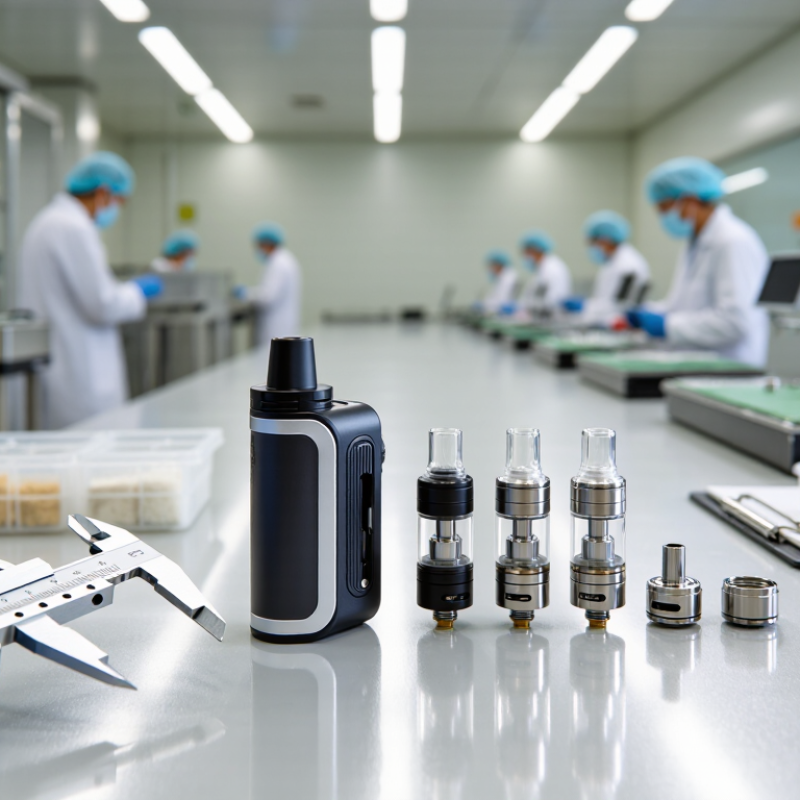
OEM vape manufacturing links product design, component sourcing, assembly, testing, and export packaging. An OEM typically builds to a buyer’s specifications, while the buyer defines the product requirements and sales markets. Grand View Research estimated the global e-cigarette and vape market at USD 28.17 billion in 2023, projecting a 30.6% compound annual growth rate from 2024 to 2030. These are market estimates, not factory forecasts; report definitions can differ. Still, the scale helps explain why buyers compare suppliers on production capacity, traceability, and quality records, not unit price alone.
The supply chain can involve separate vendors for batteries, heating elements, housings, and cartons. UNCTAD’s Review of Maritime Transport 2024 reports that shipping carries over 80% of world trade by volume. A delayed component can therefore hold up finished goods, even when the assembly line is ready. Small details matter. During a supplier review, buyers can check incoming-inspection logs, batch records, and how rejected parts are isolated. A practical weakness is often mundane: a revised label file may not reach the packaging line in time. OEM partnerships can reduce that risk through written specifications and sample approval, though paperwork alone cannot prove consistent production. Factory visits and repeat batch checks provide stronger evidence.
How to Evaluate OEM Vape Manufacturers for International Markets
Evaluating an OEM vape manufacturer for international markets starts with evidence, not a polished sample. Ask for a current quality-management certificate, its issuing body, scope, and audit status. The ISO Survey 2022 recorded 1,265,216 ISO 9001 certificates across 189 countries and economies. Certification is common; it does not prove a factory controls every batch. Request lot-level inspection records, component traceability, change-control logs, and corrective-action reports. Check a production run, not only a showroom unit.
Test whether the supplier can manage destination-market differences. Compare labeling, battery documentation, packaging languages, and shipping paperwork with each market’s current requirements. Ask who tracks changes to standards or components. UNCTAD’s Review of Maritime Transport 2024 reports that more than 80% of world merchandise trade by volume moves by sea. Packaging trials should include moisture protection, carton drop tests, and clear shipment marks. Small failures travel far.
Review capacity using measurable records: output by line, defect-rate definitions, lead-time history, and backup component sources. Ask for anonymized evidence and compare it with purchase orders. A low quote may exclude tooling, testing, or rework. No checklist is perfect. A factory visit can show one unusually good day. Keep a pilot order and independent pre-shipment inspection in the evaluation plan.
Key Nicotine Concentration Limits for International Vape Markets
A regulatory benchmark OEM buyers can use when screening products for market-specific compliance.
The EU Tobacco Products Directive and the UK’s corresponding rules cap nicotine concentration in e-liquids at 20 mg/mL. Canada’s federal regulations prohibit the manufacture, import, or sale of vaping products with nicotine concentrations above 66 mg/mL. These limits are only one compliance check: buyers should verify current local requirements and product-specific rules before placing an OEM order.
Sources: EU Directive 2014/40/EU, Article 20; UK Tobacco and Related Products Regulations 2016; Canada Vaping Products Labelling and Packaging Regulations.
Profiles of Ten OEM Vape Manufacturers Serving Global Buyers
Global buyers can assess OEM vape manufacturers by checking what each factory can document, sample, and repeat. One profile is a high-volume assembler, suited to stable specifications and large production runs. Another specializes in compact device design, where casing fit and button response deserve close inspection. A third focuses on battery integration and should provide clear test records. A fourth offers flexible customization, though frequent changes can complicate quality control. Small details matter.
A fifth manufacturer may stand out for automated assembly and consistent component placement. A sixth may offer strong packaging coordination, including carton samples and readable batch codes. A seventh could serve buyers needing lower initial production quantities, but its lead times need verification. An eighth may have in-house engineering support for prototypes and tooling. Ask who owns revisions. A polished sample can hide production limits.
A ninth profile is a manufacturer with established inspection routines, such as incoming-part checks and documented final testing. A tenth may coordinate multiple suppliers, helping simplify purchasing while adding another point to audit. For every profile, request recent quality records, sample units from a normal production run, and a written specification sheet.
Factory claims are useful, not conclusive. Buyers should compare evidence, clarify responsibilities, and revisit assumptions before approving an order.
Comparing Product Capabilities, Quality Systems, and Customization
Comparing OEM vape manufacturers takes more than reviewing a catalog. A capable supplier should explain how each device is developed, tested, and tracked. Ask to see sample inspection records, batch identification methods, and documented checks for battery performance and leakage. Details matter. A polished sample is useful, but it cannot show how consistently a factory handles a full production run.
Quality systems should be assessed through evidence, not broad promises. Buyers can ask how incoming materials are checked, how defects are recorded, and what happens when a test fails. Request current documentation and confirm that the proposed process matches the product being quoted. A factory may have a formal system, yet its daily records can still be uneven. That deserves a closer look.
Customization also needs practical limits. Discuss dimensions, airflow settings, materials, color matching, and packaging specifications before approving a sample. Clear drawings and written tolerances reduce avoidable changes later. Ask how revisions affect tooling, lead time, and quality checks. Then compare answers across suppliers. Some details will remain uncertain until a pilot run, so build time for review rather than assuming every sample predicts final production. Verify that product specifications and required documentation fit the intended market before placing an order.
Assessing Regulations, Export Readiness, and Supplier Fit
For global buyers, an OEM supplier’s export readiness is more than a shipping record. It means matching product specifications, labeling, packaging, and documentation to each destination’s current rules. Requirements can differ sharply across markets. The World Health Organization’s 2023 Report on the Global Tobacco Epidemic noted that 34 countries banned e-cigarette sales, while many others had no specific regulation. Treat that figure as a warning, not a market-entry checklist; rules can change, and local requirements need direct verification.
Ask potential manufacturers for current, product-specific test reports and a document trail linking each production batch to its components. Check battery safety records, materials declarations, quality-control procedures, and how the supplier handles specification changes. Request sample labels and export documents before approving a production run. Small discrepancies matter. A missing language panel or inconsistent model number can delay a shipment.
Supplier fit also depends on practical communication. Can the factory explain its defect thresholds, lead times, and corrective-action process in writing? Do sample units match the approved specifications? A polished audit file is useful, but it does not prove every routine is followed on the production floor. Buyers should verify claims through independent audits where appropriate, and keep a record of unresolved gaps. No supplier fits every market. The best choice is one whose capabilities and documentation match the buyer’s verified destination requirements.