

Top Plastic Cup & Bottle Manufacturers for Global Buyers?
Choosing the right Plastic Cup & Bottle manufacturer requires more than comparing prices or attractive product photos. Global buyers must examine production experience, material consistency, factory capacity, quality controls, and communication discipline. A reliable supplier should explain resin grades, wall thickness, closure performance, mold ownership, minimum order quantities, and realistic lead times. Factory audits, sample testing, and documented inspection procedures also matter.
Dr. Jenna Jambeck, a leading plastic-waste researcher, has said, “There is no silver bullet to solving the plastic pollution problem.” Her warning belongs in every sourcing discussion. A low-cost cup or bottle may create higher costs through leakage, poor stacking, inconsistent color, or excessive packaging. Better manufacturers discuss recycled content, lightweighting, recyclability, and responsible production without making vague environmental promises.
The strongest candidates usually provide traceable material records, production samples, and clear corrective-action processes. Ask for evidence, not slogans. Look closely at the factory floor. Are operators checking dimensions? Are cartons protected from moisture? Does the supplier understand your filling line and shipping route?
No supplier is perfect. Neither is this evaluation.
Some manufacturers excel at high-volume commodity bottles but struggle with custom shapes. Others offer impressive design support but limited capacity during peak seasons. This guide compares leading Plastic Cup & Bottle manufacturers through practical factors, including product quality, customization, certifications, sustainability efforts, export experience, and buyer support. Its goal is not to declare one universal winner, but to help buyers identify the best operational fit for their market, budget, and long-term expectations.
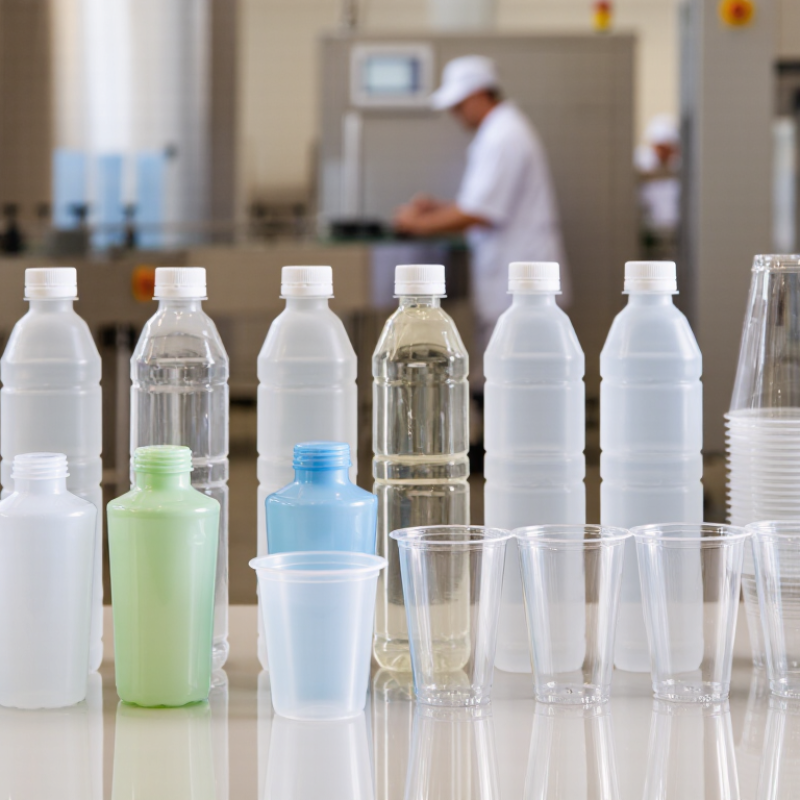
Global Plastic Cup and Bottle Manufacturing: An Industry Overview
Global plastic cup and bottle manufacturing serves food service, retail, healthcare, hospitality, and industrial packaging markets. Production commonly uses PET, PP, HDPE, and recycled resin, depending on product requirements. Each material affects clarity, stiffness, temperature resistance, and recycling compatibility.
Manufacturers usually combine injection molding, blow molding, thermoforming, and high-speed trimming. Cup lines may produce thousands of units per hour. Bottle production demands accurate neck dimensions, stable wall thickness, and reliable sealing surfaces. Experienced buyers inspect resin specifications, mold quality, production records, and shipment consistency. They should also request samples under real filling and transport conditions. A container that looks strong may deform during stacking.
Quality control includes weight checks, leak testing, visual inspection, and dimensional measurement. Food-contact applications require traceable materials and documented process controls. Global sourcing also involves pallet design, carton strength, lead times, and port handling. Recycled content can reduce virgin resin use, but it may affect color, odor, or clarity. The trade-off needs practical testing.
No factory is perfect. Even disciplined production can face color variation, mold wear, or delayed raw materials. Buyers should examine corrective-action records instead of trusting polished presentations. Clear specifications prevent expensive misunderstandings. Sustainability claims also need evidence, not attractive wording. A reliable supplier explains limitations, reports defects honestly, and improves processes over time. That matters more than a low quotation.
Key Product Types and Applications for International Buyers
For global buyers, plastic cups and bottles should be selected by application, not appearance alone. Cold-drink cups often use PET or PP, while takeaway food cups may require stronger walls and leak-resistant lids. Bottles vary by capacity, neck size, closure, and filling method. A 250 ml bottle suits samples and personal drinks. Larger formats work better for household, hospitality, and industrial applications.
In practical sourcing reviews, buyers should examine resin specifications, wall thickness, weight tolerance, and production consistency. Ask manufacturers for sample cartons, test reports, food-contact documentation, and recent quality records. A bottle may look perfectly clear but still deform during hot transport. That detail is easy to miss. Decoration also matters. Labels, direct printing, sleeves, and embossed surfaces suit different order volumes and budgets. Confirm whether the supplier can match color, cap fit, and artwork across repeat orders.
Tips: Test samples under real conditions. Fill cups with ice and liquids. Stack loaded cartons for several days. Check odor, leakage, cracking, and lid fit. Confirm packaging dimensions before booking freight. Lower unit prices can create higher shipping costs. I have seen buyers focus too heavily on appearance, then revise their specifications after the first trial. That review process is useful, although it should begin before mass production. Manufacturers with documented inspections and clear corrective-action procedures usually offer more dependable support for international applications.
Top Plastic Cup & Bottle Manufacturers for Global Buyers: Common Product Capacities by Application
The chart compares widely used commercial capacities for plastic cups and bottles across major international applications. These are representative packaging formats, not company or brand market-share figures.
Larger capacities are commonly used for household, foodservice, and family-size products, while smaller formats are frequently selected for personal consumption, travel, retail, and personal-care applications.
How to Evaluate Plastic Packaging Manufacturers
Choosing a plastic cup or bottle manufacturer requires more than comparing quoted prices. Global buyers should inspect how the factory controls materials, tooling, production, and shipment records. Ask for resin specifications, food-contact declarations, batch traceability, and recent quality reports. A reliable supplier explains its process without vague promises.
That matters.
Request samples from several production runs, not only polished samples prepared for meetings. Check wall thickness, cap fit, seal strength, odor, clarity, and drop resistance. Test filled containers after heat, cold, stacking, and transport simulation.
Small defects often appear at the neck or base. They become expensive later. Verify certifications through the issuing organization and confirm their regional scope.
Evaluate capacity honestly. A factory may claim high output yet struggle with your required color, mold, or delivery schedule. Review machine lists, maintenance logs, inspection staff, and corrective-action records. Confirm whether production is in-house or partly outsourced. Clarify minimum order quantities, mold ownership, payment stages, packaging details, and response times. Keep written evidence. Do not treat one certificate as proof of every capability. Good samples can fail during repeated runs. No audit is perfect. Transparent manufacturers welcome reasonable questions, although communication may still be imperfect.
Quality, Safety, and Regulatory Standards in Global Sourcing
Choosing top plastic cup and bottle manufacturers requires more than comparing prices or production capacity. Global buyers should examine food-contact compliance, material traceability, factory hygiene, and quality-control records. A reliable supplier can provide resin details, batch numbers, migration test results, and documentation for the destination market. Requirements may differ across regions, so one certificate cannot cover every shipment.
Factory experience matters. Ask how operators control wall thickness, sealing strength, color consistency, and contamination risks. Request recent inspection reports, not only old certificates. During an audit, inspect storage areas, production lines, and finished-goods packaging. Dust near open containers is a warning sign. I have found that small process gaps often create larger delivery problems later. Some manufacturers communicate well but document poorly. That weakness deserves attention.
Tips: Define product specifications before requesting quotations. Include dimensions, capacity, resin type, tolerance, closure design, and packaging details. Confirm whether recycled content is permitted for your application. Review samples under real filling and transport conditions. Test leakage, odor, deformation, and label adhesion. Keep a signed approval sample for future production. It is simple, but often missed. Ask for a corrective-action plan when defects appear, and check whether the supplier follows it. Quality is not a single inspection; it is a repeatable system supported by trained staff, clear records, and honest reporting.
Choosing the Right Supplier for Your Market and Order Needs
Choosing the right plastic cup or bottle supplier starts with market fit, not a global ranking. A high-volume beverage buyer may need automated production, tight weight control, and stable delivery schedules. A smaller food-service distributor may value flexible tooling and lower minimum order quantities. Request samples from at least three manufacturers. Check rim strength, cap torque, leakage, stacking performance, and print consistency under real warehouse conditions. Attractive samples can still fail during transport.
Material selection also requires evidence. The OECD Global Plastics Outlook reports that global plastic waste reached 353 million tonnes in 2019, while only 9% was recycled. This makes recycled content, lightweighting, and clear material identification important purchasing criteria. Ask suppliers for resin documentation, recycled-content verification, food-contact declarations, and batch traceability. Do not accept vague claims such as “eco-friendly.” Get measurable percentages and test records. Local labeling and packaging rules must also be reviewed before production.
Order economics deserve equal attention. Compare tooling fees, unit prices, freight, inspection costs, and payment terms in one landed-cost model. Suppliers with several production sites may reduce regional delivery risk, but extra facilities can complicate quality control. Review factory audit reports, corrective-action records, production capacity, and contingency plans for resin shortages. A practical trial order can reveal more than a polished presentation. Even experienced buyers sometimes overestimate forecast accuracy; leave room for demand changes, rejected units, and seasonal storage. Industry forecasts from Grand View Research indicate continued growth in plastic packaging, but growth does not guarantee every supplier can support your market or order pattern.

