

What Are the Top Sleeve Pallets for Global Buyers?
Global buyers need more than a low purchase price when selecting Sleeve Pallets. They need reliable handling, efficient storage, and predictable delivery performance. A pallet that works in a dry warehouse may fail beside a humid port. Small details matter. Board thickness, sleeve strength, entry design, and load distribution can change the result.
This guide examines the top Sleeve Pallets for international purchasing teams. It compares wooden, plastic, and hybrid options through practical criteria. These include static load capacity, racking safety, nesting efficiency, repairability, and shipping weight. Buyers should also check dimensions against forklifts, conveyors, and automated storage systems. A 1,200-by-800-millimeter footprint may suit one network, while another requires 1,200-by-1,000 millimeters. Experience shows that compatibility often matters more than appearance.
Standards provide direction, but testing remains essential. ISO 8611 testing can help assess pallet performance under defined conditions. Wooden components may also require treatment and documentation for international movement. Requirements differ by destination and shipment type. Confirm them with qualified logistics and customs professionals. No ranking fits every warehouse. Even experienced buyers can overlook sleeve replacement time or moisture exposure. This article therefore treats performance claims carefully and encourages sample trials before large orders. A simple pilot can reveal cracked boards, unstable stacking, or difficult sleeve removal. Those findings may challenge an attractive quotation, but they protect long-term supply reliability.
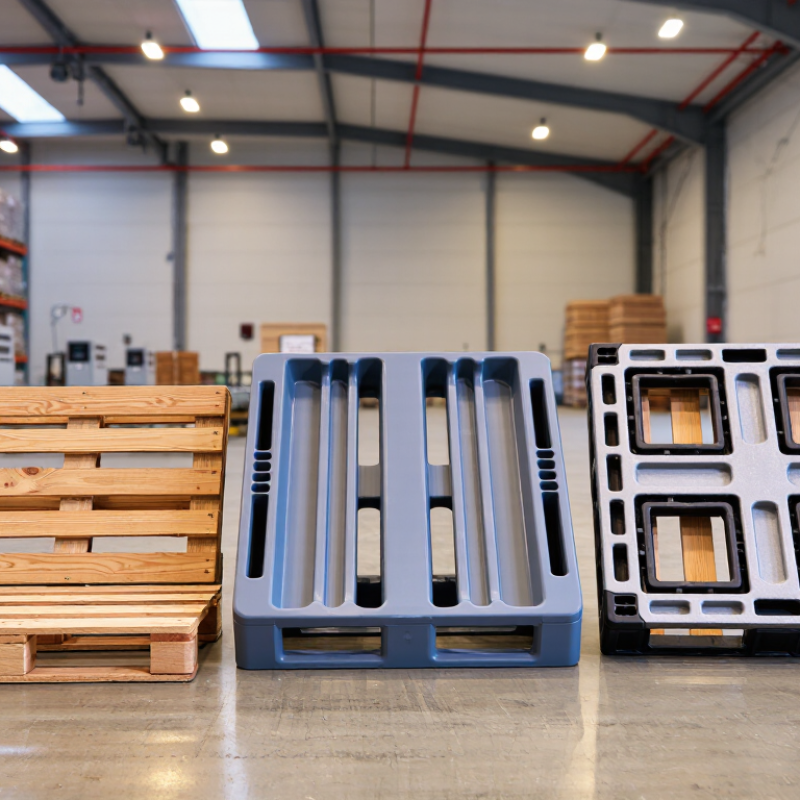
What Are Sleeve Pallets and How Do They Work?
Sleeve pallets combine a flat pallet, a collapsible sleeve, and often a top lid. The sleeve folds around the load like a reusable wall. It prevents cartons from shifting during forklift movement and long-distance transport. Workers can remove the sleeve without cutting strapping or opening a rigid box. That saves handling time.
The system works through repeated circulation. A loaded pallet enters storage, distribution, or production. At the destination, staff fold the sleeve and stack the empty parts. This reduces return volume. Freedonia’s World Pallets report identifies rising demand for reusable transport packaging, especially where logistics networks support backhaul trips. Design still matters. A sleeve pallet needs compatible pallet dimensions, safe stacking strength, and clear load limits.
Materials change performance. Plastic sleeves resist moisture and repeated washing, while corrugated or composite sleeves can reduce weight. The OECD’s Global Plastics Outlook reports that only 9% of global plastic waste was recycled in 2019. That figure makes end-of-life planning essential, not optional. A recyclable sleeve is not automatically sustainable if it travels empty for hundreds of kilometres. In practical trials, uneven cartons, loose film, and poor corner protection remain common weaknesses. They can cause load collapse. The technology is useful, but not magical. Buyers should test real products, warehouse temperatures, forklift clearances, and return routes before selecting a sleeve pallet for global use.
Which Materials and Designs Are Used in Sleeve Pallets?
Sleeve pallets combine a load platform with a removable protective sleeve. Their material choice affects weight, hygiene, repair, and export handling. In practice, timber remains popular because it tolerates rough forklift contact and supports simple repairs. Plastic performs better in wet rooms and repeated cleaning cycles. Corrugated board offers low weight and easy recycling, but moisture can weaken its edges. Metal provides strength for heavy industrial loads, although it increases unit weight and handling effort.
Eurostat’s Packaging Waste Statistics for 2022 reported an 81.5% recycling rate for paper and cardboard packaging in the European Union, compared with a 42.1% rate for plastic.
This difference can influence disposal planning. It does not prove that paper always wins.
Design details often decide performance. A four-way entry pallet gives forklifts more access points and reduces repositioning. Nestable bases save warehouse space when empty, while rackable designs need stronger deck support and controlled deflection. Removable sleeves should lock firmly without tools, yet fold flat for return transport. Ventilation openings help chilled products, but they can reduce sleeve rigidity.
ISO 8611 testing covers pallet performance under compression, bending, and impact conditions. Buyers should request test results for the exact material and load pattern. Real warehouses are less tidy than specifications suggest. Dust, uneven floors, and rushed operators expose weak corners quickly.
I would not select a sleeve pallet from static load figures alone. Dynamic tests matter more.
Sometimes, the cheaper design becomes expensive after one damaged shipment.
How Do Top Sleeve Pallets Perform Under Global Shipping Conditions?
What Are the Top Sleeve Pallets for Global Buyers?
Top sleeve pallets must perform beyond the warehouse floor. During global shipping, they face vibration, compression, humidity, temperature changes, and repeated handling. A reliable design keeps cartons aligned inside containers and trucks. It also allows quick loading with standard forklifts or pallet jacks.
In practical shipping tests, load stability is a key measure. Sleeves should resist bending when several pallets are stacked. They need firm corners and consistent dimensions. Forklift entry should remain clear after long transport. They absorb shocks. Moisture resistance matters too. Sea air can soften weak materials, especially around exposed edges. Buyers should inspect sleeve joints, pallet decks, and bottom supports before reuse.
Reusable sleeve pallets can reduce storage space when empty. Collapsible sleeves help return shipments occupy less volume. However, folding systems may need careful handling. A damaged hinge or uneven fold can affect stacking accuracy. Weight also deserves attention, since heavier pallets increase freight costs. No sleeve pallet performs perfectly in every route. A design that works in a dry warehouse may weaken in tropical humidity.
Global buyers should request test records, dimensional tolerances, and handling instructions. They should also run a small route trial before a large purchase. Measure crushed cartons, sleeve movement, and unloading time. These details reveal more than a product photograph. One limitation is often overlooked: clean, undamaged pallets perform better than neglected ones. Regular inspections remain necessary, even with strong materials.
What Are the Top Sleeve Pallets for Global Buyers?
Typical performance benchmarks for common sleeve-pallet formats used in international road, ocean, and air-freight logistics.
Plastic systems generally provide the highest dynamic load capacity and better moisture resistance, while corrugated systems minimize tare weight and freight cost. Actual performance depends on pallet design, stacking pattern, humidity, temperature, handling equipment, and load distribution.
Which Safety Standards Matter to International Buyers?
International buyers should judge sleeve pallets by verified safety performance, not appearance. ISO 8611 defines tests for pallet load capacity, bending, and durability. ISO 6780 supports consistent dimensions across handling systems. This matters when pallets move through forklifts, conveyors, and automated warehouses. A sleeve pallet should show safe working load, stacking limits, fork-entry guidance, and test conditions. Those figures must reflect real use, not ideal laboratory floors.
Wooden components also require attention. The IPPC’s ISPM 15 standard requires approved treatment and marking for many solid-wood packaging materials in international trade. Buyers should request treatment records and inspect marks before shipment. The 2024 MHI Annual Industry Report found that 55% of supply-chain leaders planned to increase technology investment. That trend supports digital pallet records, inspection histories, and lot-level traceability. Yet technology does not replace physical checks. A damaged sleeve, split board, or loose fastener can still create a serious handling risk. I have seen specifications pass review while actual warehouse conditions were ignored.
Tips: Ask for ISO 8611 test reports, material details, and maximum working loads. Confirm whether ratings cover static, dynamic, and racking use. Check sleeve height, corner protection, and collapsed storage requirements. Request evidence of ISPM 15 compliance when wood is included. Photograph incoming pallets during inspection. Keep records. Small gaps remain possible, especially when suppliers use different testing methods. Recheck performance after repeated cycles, moisture exposure, and rough forklift handling.
How Can Buyers Evaluate Suppliers, Costs, and Sustainability?
Global buyers should evaluate sleeve pallets through measurable supplier evidence, not attractive catalog claims. Ask for load ratings, sleeve thickness, moisture limits, repair procedures, and test methods. A reliable supplier should provide batch records and samples from normal production. Check whether pallet dimensions match forklifts, conveyors, and storage racks. Small mismatches create damage and handling delays.
Cost needs a wider calculation. Compare purchase price, freight volume, cleaning, repairs, return transport, and expected reuse cycles. The World Bank’s Logistics Performance Index 2023 shows major differences in logistics reliability between markets. That makes local stock and replacement lead time important. A cheaper pallet can become expensive after one missed shipment. Request a landed-cost model using your actual route and damage history.
Sustainability claims also need evidence. The OECD’s Global Plastics Outlook reports that plastic waste reached 353 million tonnes in 2019, while only 9% was recycled. Buyers should request recycled-content percentages, material declarations, and end-of-life instructions. For wooden components, verify legal sourcing and heat-treatment records under ISPM 15. Life-cycle data is useful, but assumptions can be selective. Reusable systems may still perform poorly when empty sleeves travel long distances. Measure return rates. Review the numbers honestly.
What Are the Top Sleeve Pallets for Global Buyers? - How Can Buyers Evaluate Suppliers, Costs, and Sustainability?
Comparative buyer framework for common sleeve-pallet formats. Cost and performance figures are indicative planning ranges and should be confirmed through supplier quotations, testing, and destination-country requirements.
| Sleeve-Pallet Format | Typical Applications | Indicative Unit Cost (USD, Ex-Works) | Typical Static Load (kg) | Typical Weight (kg per set) | Material & End-of-Life Profile | Key Supplier Evaluation Points |
|---|---|---|---|---|---|---|
| Corrugated Fiberboard Sleeve Pallet | Consumer goods, appliances, food packaging, export shipments with moderate handling requirements | US$4–12 per set in medium-to-large volumes | Approximately 300–1,000 | Approximately 4–10 | Paper-based and generally recyclable where clean fiber collection is available; avoid excessive wet exposure | Paper grade, flute structure, edge-crush strength, moisture resistance, compression testing, flat-pack efficiency, and recycling instructions |
| Honeycomb Paperboard Sleeve Pallet | Heavy but relatively dry products, industrial components, furniture, and export packaging | US$6–18 per set in medium-to-large volumes | Approximately 500–1,500 | Approximately 6–14 | High recycled-fiber content is common; recyclable in paper streams when free from incompatible coatings and contamination | Honeycomb cell density, board thickness, compression resistance, corner protection, moisture performance, and consistency between production lots |
| Engineered Paper Sleeve Pallet with Reinforced Corners | Automotive parts, machinery components, export cargo, and products requiring improved stacking stability | US$8–24 per set in medium-to-large volumes | Approximately 700–2,000 | Approximately 8–18 | Mostly fiber-based; reinforcement may include laminated paper or limited non-paper components that require separation | Corner-post design, load distribution, stacking height, dimensional tolerance, protection against forklift contact, and certification documentation |
| Reusable Plastic Sleeve Pallet | Closed-loop distribution, automotive supply chains, warehouses, and repeated domestic transport cycles | US$35–110 per set, depending on polymer, size, and features | Approximately 800–2,500 | Approximately 15–35 | Durable and reusable; recyclable at end of life when made from identifiable, compatible polymers and collected through suitable channels | Polymer type, recycled content, repairability, nesting or folding ratio, return logistics, impact resistance, hygiene requirements, and total-cycle cost |
| Reusable Textile or Composite Sleeve System | Returnable transport packaging, precision components, clean manufacturing, and high-value products | US$45–150 per set, depending on design and fittings | Approximately 500–1,500 | Approximately 10–28 | Designed for repeated use; end-of-life recycling depends on whether textiles, films, foams, and rigid inserts can be separated | Washability, tear strength, fastening durability, repair service, reverse logistics, material separation, and documented reuse cycles |
| Wood-Based Sleeve Pallet System | Heavy industrial goods, construction materials, machinery, and routes with demanding handling conditions | US$20–75 per set, depending on timber grade and treatment | Approximately 1,000–3,000 | Approximately 25–60 | Repairable and potentially reusable; wood packaging used in international trade may require treatment and compliance marking under destination-country rules | Timber legality, moisture content, heat-treatment documentation, fastener quality, repairability, dimensional accuracy, and import compliance |

