
Why Choose Paper Cup Bowls for Your Business?

A paper cup bowl can look simple on a counter: a sturdy rim, a clean surface, and enough depth for soup, noodles, or a grain bowl. For food businesses, the decision reaches beyond appearance. Fit, leak resistance, heat handling, storage space, and serving speed all affect the customer experience. The right Cup Paper Bowl should suit the menu and the pace of service.

The U.S. Environmental Protection Agency’s 2018 Facts and Figures report estimated that 67.4 million tons of paper and paperboard entered the U.S. municipal waste stream. About 46 million tons were recycled, a reported rate of 68.2%. These figures cover a broad material category, not paper bowls alone. That distinction matters. A material’s environmental performance depends on its design, local collection systems, and actual disposal route.

Packaging scholar Dr. Susan Selke’s work on life-cycle assessment offers a useful lens. Paraphrased, not a verbatim quotation: assess packaging across its full life cycle, rather than judging it by material alone. Businesses can apply that idea by comparing bowl sizes, coatings, lids, supplier specifications, and local recovery options. A bowl that performs poorly can mean spills, wasted food, or frustrated staff. Small details count. Paper bowls are not automatically the best choice for every menu or location, and claims should be checked against supplier documentation. The sections ahead explore where paper cup bowls can help, what to verify before buying, and how to choose a practical option for your operation.
Why Choose Paper Cup Bowls for Your Business?

What Are Paper Cup Bowls?

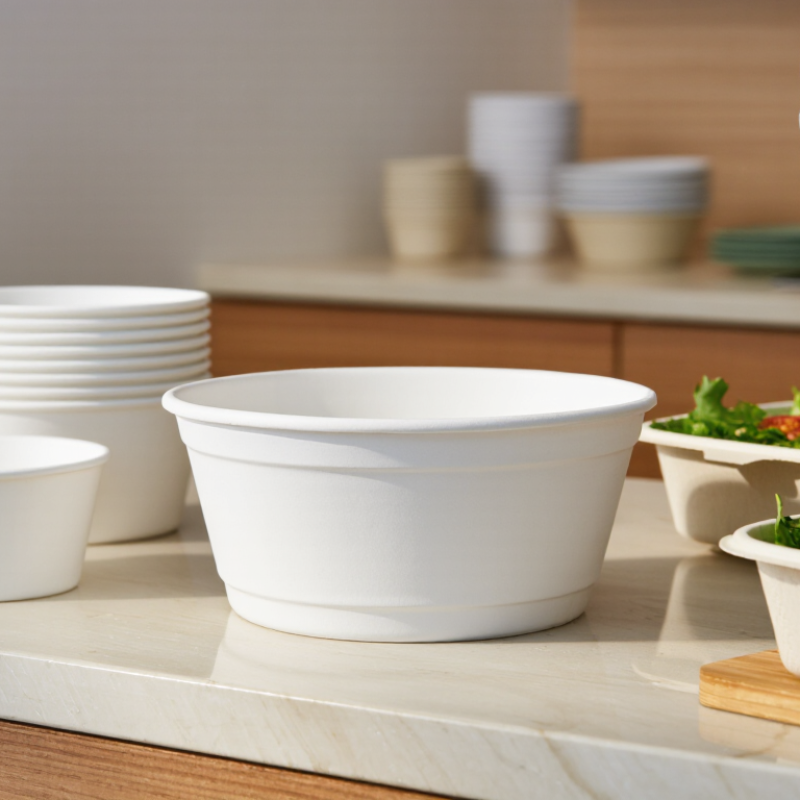
Paper cup bowls are formed from stiff paperboard and shaped with a wide opening, rounded base, and rolled rim. Many use a thin barrier lining to resist moisture and grease. This lets them hold foods such as soup, noodles, rice, or salad without immediately softening. Some are designed for hot meals; others suit chilled foods. Check the product’s temperature and food-contact specifications before choosing.

The construction matters. A bowl that looks like plain paper may include a plastic or other barrier layer, which can affect how it is handled after use. The U.S. Environmental Protection Agency’s 2018 materials report estimated that 71.3% of paper and paperboard containers and packaging were recycled. That figure covers a broad packaging category, not paper bowls alone. Local acceptance varies, too. The word “paper” can be misleading.

Tips: Match bowl capacity to your serving size, then test it with the actual food and sauce. Check whether the rim fits your lids and whether local facilities accept the used bowl. A small trial helps. Food may sit longer than expected, so test for leaks and softening over realistic service times.

How Are Paper Cup Bowls Made?

Paper cup bowls begin as food-contact paperboard, selected for stiffness and suitability for the intended contents. Manufacturers print the flat sheets, then cut them into shaped blanks. The printed surface may face outward, while a thin barrier layer helps resist moisture and grease. Its material and thickness vary with the bowl’s use. Small details matter.

A forming machine curls each blank into a round wall and joins its side edges with heat or adhesive. A separate circular base is fitted into the bottom and sealed against the wall. The rim is rolled over to create a smoother, more rigid edge. Then comes forming. Temperature, pressure, and alignment need close control; a loose seam can lead to leakage.

Finished bowls are checked for dimensions, seam quality, and resistance to leaks or deformation. Some producers test samples with water or warm food, since performance can change with temperature and time. Paper bowls are not automatically easy to recycle: coatings and local collection systems affect what happens after use. That part deserves honest attention. Manufacturing can look simple from the outside, but consistent sealing takes careful adjustment and repeat testing.

Why Choose Paper Cup Bowls for Your Business? How Are They Made?

Paper cup bowls can be lightweight and convenient for serving food. Their typical production turns paperboard into a shaped bowl through printing, cutting, forming, and sealing.

How to read this chart: The bars show the order of common manufacturing steps—not production time, cost, or environmental impact. Exact processes vary by bowl design and material.

Which Businesses Commonly Use Paper Cup Bowls?

Paper cup bowls are used by businesses that serve food quickly, in portions, or away from a dining table. Cafés may use them for oatmeal, yogurt with fruit, or warm soup. Quick-service restaurants often serve rice, noodles, salads, and side dishes in bowls that customers can carry. For busy lunch counters, a stack near the service line can make packing faster.

Food trucks and takeaway shops value bowls for meals eaten outdoors or on the move. Caterers use them at office lunches, markets, and informal events, where guests may be standing rather than seated. Schools, workplace cafeterias, and community dining programs may also choose them for portioned meals. Practical detail matters: a bowl holding thick chili needs a different level of stiffness than one used for a small fruit serving. Test the intended food.

They can help simplify serving, but they are not ideal for every menu. Very hot liquids, oily sauces, or long delivery times can challenge the bowl’s strength, so staff should check performance with real portions. Lids must fit securely, too. A small mismatch can mean spills. I’ve seen packaging decisions made around appearance alone; that is an easy mistake, and one worth reconsidering before ordering in bulk.

What Benefits Do Paper Cup Bowls Offer?

Paper cup bowls can make food service simpler when customers need soup, chili, oatmeal, or a snack to go. They are light to carry and take little storage space compared with many rigid containers. Useful on a crowded counter. Staff can stack a working supply near the serving station and grab a bowl without extra handling.

For operators, the practical benefits include quick serving, easy disposal, and options in different sizes. A smaller bowl may suit fruit or side dishes, while a deeper one can hold broth and toppings. Some bowls have a lining that helps resist moisture and grease, but performance varies by construction. Check the product specifications against the foods and temperatures you serve. A lid that fits securely also matters when customers carry meals in a bag.

Paper bowls are not perfect for every menu. Very hot, oily, or long-held foods may need a sturdier option, and paper products still create waste. That trade-off deserves attention. Test a sample with an actual portion: fill it, leave it for your usual service window, and check for softening or leaks. A small trial can reveal issues that look easy to miss on a catalog page.

Why Choose Paper Cup Bowls for Your Business? - What Benefits Do Paper Cup Bowls Offer?

Business Consideration What Paper Cup Bowls Offer Potential Business Benefit Important Consideration
Lightweight serving Paper bowls are generally light to handle and transport compared with many reusable food-service containers. Can be convenient for takeaway, catering, food stalls, and events. Actual weight and strength vary by bowl size, paper grade, and construction.
Stackable storage Many disposable paper bowls are designed to nest or stack when empty. May help organize counter, storage, and service areas. Check the product dimensions and stacking compatibility with dispensers or storage shelves.
Range of serving sizes Paper bowls are available in different capacities and shapes for foods such as soup, salads, desserts, and sides. Businesses can select a size suited to their menu portions and serving format. Capacity, rim diameter, and fill level differ between products; confirm specifications before ordering.
Food and liquid use Many bowls use a barrier layer or treatment to help contain moisture and grease. Suitable options are available for serving a range of hot, cold, and moist foods. Performance depends on the bowl’s material and intended use. Follow the supplier’s temperature and use guidance.
Single-use service Disposable bowls can be used once and discarded after service. Can simplify dishwashing needs for takeaway operations and temporary events. Single-use products create waste. Provide disposal guidance and follow local waste rules.
Printing and presentation Some paper bowls can be printed with artwork, instructions, or other business messaging. Can support a consistent presentation and communicate useful information to customers. Printing options, food-contact requirements, minimum order quantities, and lead times vary by supplier.
Transport and takeaway Bowls can be paired with compatible lids where available. A suitable bowl-and-lid combination can help make takeaway portions easier to carry. Not every lid fits every bowl. Check fit, closure, and suitability for the food being served.
Microwave use Some paper bowls are designed for microwave use; others are not. Microwave-compatible options may be useful for food businesses offering reheatable meals. Use only when the product is explicitly labeled or specified as microwave-safe, and follow its instructions.
Recycling and composting End-of-life options depend on the paper, barrier coating, food residue, and local collection facilities. Businesses can choose products that align with the waste services available in their area. Paper-based does not automatically mean recyclable or compostable. Verify product claims and local acceptance rules.
Food-contact suitability Food-service bowls should be made and supplied for their intended food-contact use. Choosing an appropriate product helps support safe, reliable service. Check applicable food-contact requirements and request relevant product documentation from the supplier.

How Can Businesses Choose the Right Paper Cup Bowls?

Why Choose Paper Cup Bowls for Your Business?

How Can Businesses Choose the Right Paper Cup Bowls?

Start with what you serve and how customers receive it. Hot soup needs a sturdier bowl and a suitable lining; dry snacks may need less protection. Check capacity, rim width, and lid fit using a real portion, not just product measurements. A loose lid can cause spills in transit. Also consider whether bowls stack neatly and are easy for staff to handle during a rush.

Tips: Test a few samples with your hottest menu item. Leave one filled for several minutes, then check for softening, leaks, and heat transfer. Try the lid while carrying the bowl. Small details matter.

Compare material specifications, bowl weight, and the cost per serving. A very light bowl may seem economical, but poor rigidity can lead to messy deliveries and replacements. Consider storage space and how used bowls are handled in your area; disposal options vary. One detail is easy to miss: the bowl that looks strongest empty may feel awkward when full. Ask staff to test it before placing a large order.

Article Source:

This website uses cookies to ensure you get the best experience on our website