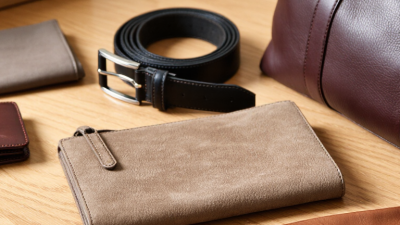

2026 Best Leather Products for Global Buyers?
Global buyers entering 2026 need more than attractive leather products. They need dependable quality, clear sourcing, and practical lifetime value. The best choices should perform well in real settings, from airport lounges to busy retail counters.
Statista’s Consumer Market Insights identifies leather goods as a major global consumer category, supported by luxury, fashion, travel, and everyday accessories. Exact market totals vary between research firms. Still, demand remains significant. Leather Naturally reports that the industry processes more than 1.4 billion hides and skins annually, most sourced as by-products of the food industry. That figure shows the scale behind each wallet, belt, bag, and footwear item.
Material selection remains important. Full-grain leather usually preserves more natural surface character, while corrected-grain leather offers more uniform appearance. Buyers should compare thickness, finishing methods, stitching density, hardware quality, and repair options. Small details matter. A weak zipper can ruin an otherwise excellent bag.
The Leather Working Group provides an established framework for assessing tannery environmental practices, traceability, and chemical management. Its audits can support supplier evaluation, but they do not replace independent product inspections. The category is not perfectly transparent. Marketing terms can sound stronger than the evidence behind them. That uncertainty matters.
This guide examines the 2026 Leather Products most suitable for global buyers. It considers durability, design relevance, responsible sourcing, customization potential, and total ownership cost. Some recommendations may remain debatable. That is useful, because responsible purchasing should leave room for better questions, not just faster decisions.
Leather Product Categories Shaping Global Markets in 2026
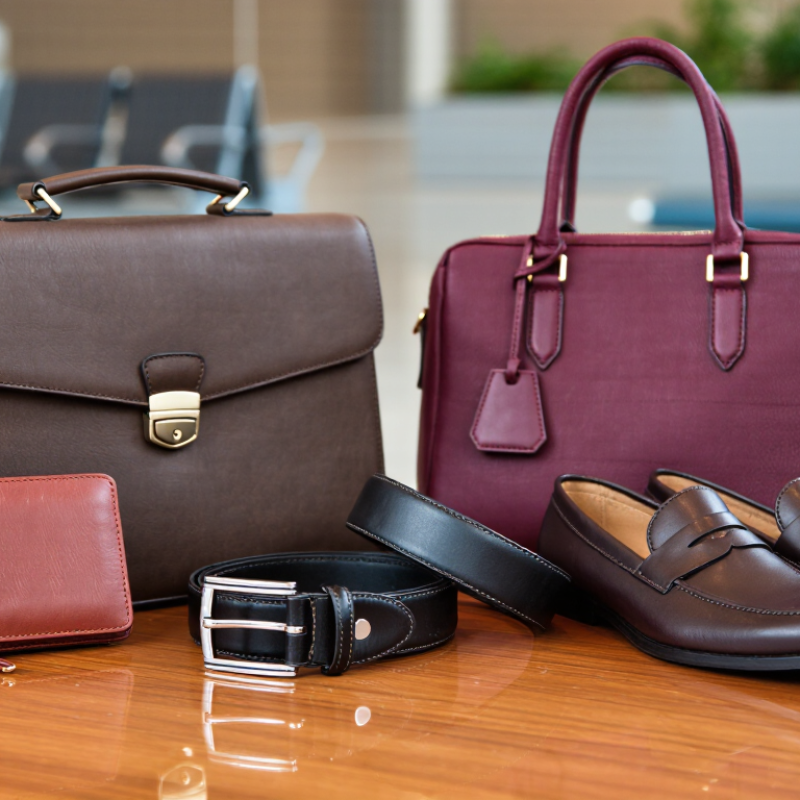
In 2026, leather bags remain strong sellers across business, travel, and everyday markets. Structured work totes now compete with lighter crossbody bags and compact organizers. Buyers often inspect edge painting, stitching density, lining quality, and hardware resistance before placing larger orders. Small details show manufacturing discipline.
Leather footwear is also expanding beyond formal shoes.
Lightweight sneakers, walking shoes, and weather-resistant boots attract practical consumers. Comfort depends on more than appearance. Buyers should request flex testing, sole adhesion results, and size consistency across production batches. Belts and wallets continue to serve as accessible leather products. Their smaller formats support gift retail and online sales, but poor edge finishing can quickly damage customer trust.
Furniture panels, automotive interiors, and protective cases are shaping higher-value demand. These categories require stable color, abrasion resistance, and dependable thickness. Traceable sourcing is becoming more important, especially for buyers managing retailer standards. Vegetable-tanned leather appeals to some markets, while coated and corrected finishes offer easier maintenance. Neither option fits every use. Recycled content claims also need careful documentation, not attractive wording alone.
Testing can be costly. That is an uncomfortable weakness for smaller suppliers. Still, clear material records, sample approvals, and consistent inspection create more reliable global trade.
Key Materials, Tanning Methods, and Quality Indicators
For global buyers in 2026, leather selection starts with the material, not the marketing label. Full-grain leather keeps the natural grain and usually develops richer marks over time. Corrected-grain leather offers a more uniform surface, but heavy coating can hide weak areas. Split leather can perform well when finished carefully. Bonded leather is different; it contains reconstituted leather fibers and needs clear labeling.
The tanning method affects feel, durability, and environmental controls. Chrome tanning remains widely used because it produces soft, flexible leather efficiently. Vegetable tanning creates firmer leather with visible color change and patina. Aldehyde and combination tanning serve specific performance needs. The Leather Naturally industry overview estimates that more than 1.5 billion hides and skins enter leather production annually, mostly as meat-industry by-products. That scale makes traceability important. It also makes careless sourcing harder to excuse.
Quality checks should include thickness consistency, tensile strength, tear resistance, flex cracking, colorfastness, and surface adhesion. Buyers should request test results, not only attractive samples. The International Organization for Standardization publishes test methods for leather thickness, tear strength, and flex resistance. Audit records should also address restricted chemicals and wastewater treatment. I inspect the bend area first. Small cracks often reveal poor finishing. “Premium” remains a slippery word. A 2024 materials-market report from Textile Exchange also stresses better material transparency, though leather reporting still has gaps. That is worth admitting.
How to Evaluate Leather Products for Different Uses
2026 Best Leather Products for Global Buyers
How to Evaluate Leather Products for Different Uses
Choosing leather for global markets requires more than judging color and softness. A smooth surface may look attractive but hide a weak coating. For bags and wallets, examine the grain, edge finishing, stitch density, and bending marks. Leather should feel flexible, not plastic-like. Ask for sample pieces, production details, and test records before placing a large order.
Different uses demand different performance. Upholstery leather needs abrasion resistance and consistent thickness. Work belts require firm fibers, strong holes, and reliable hardware. Footwear leather must balance flexibility, moisture resistance, and shape retention. A heavy hide is not automatically better. It may feel uncomfortable or crack after repeated folding. Small details matter.
Inspect it closely.
In practical buying, light-colored leather often reveals scratches faster than darker finishes. However, darker coatings can hide surface defects during inspection. Request photos in natural light, then compare them with the physical sample. Check odor, color transfer, seam strength, and recovery after stretching. Suppliers should explain the leather type, finish, care needs, and country-specific documentation clearly. I have seen buyers trust polished samples too quickly. That mistake is easy to repeat. A simple wear test may expose uneven dye, loose stitching, or a finish that peels under friction. Leave room for uncertainty, because leather remains a natural material with visible variation.
2026 Best Leather Products for Global Buyers? - How to Evaluate Leather Products for Different Uses
A practical comparison of leather materials and product applications for international purchasing decisions.
| Product Application | Recommended Leather Type | Typical Thickness | Durability | Appearance and Aging | Moisture and Scratch Behavior | Maintenance Level | Key Buying Checks |
|---|---|---|---|---|---|---|---|
| Belts and Heavy-Duty Straps | Full-grain or firm top-grain cowhide | 3.0–4.5 mm | Very high | Develops a visible patina; structured and resistant to stretching when properly cut | Handles normal abrasion well; prolonged moisture may cause staining, stiffness, or shape change | Low to medium | Check leather thickness, edge finishing, consistent temper, stitching density, buckle attachment, and absence of loose grain |
| Footwear Uppers | Full-grain, top-grain, or corrected-grain leather, depending on the required finish | 1.2–2.2 mm | High | Full-grain shows natural grain and ages attractively; corrected grain provides a more uniform surface | Surface treatment improves water resistance, but no leather is completely waterproof without suitable construction and protection | Medium | Evaluate flex cracking, color rub-off, lining quality, seam strength, leather uniformity, and compatibility with the intended climate |
| Handbags and Structured Luggage | Top-grain or full-grain leather with suitable reinforcement | 1.2–2.5 mm | High | Offers a premium natural surface; embossed or corrected surfaces provide greater visual consistency | Can resist everyday scuffs when finished properly; corners and handles receive the most wear | Medium | Inspect panel matching, edge paint or folded edges, handle attachment, hardware plating, seam allowance, and internal reinforcement |
| Wallets, Card Holders, and Small Accessories | Thin full-grain, top-grain, or vegetable-tanned leather | 0.8–1.6 mm | Medium to high | Vegetable-tanned leather generally develops a stronger patina; finished leather keeps a more stable color | Thin leather may show scratches and moisture marks more easily, especially with an aniline or lightly finished surface | Medium | Check fold performance, edge burnishing, pocket stretch, thickness consistency, dye fastness, and whether layers are split evenly |
| Sofas, Chairs, and Upholstery | Corrected-grain, top-grain, or split leather with a durable protective finish | 0.9–1.4 mm | Medium to high | Corrected finishes offer consistent color; aniline finishes preserve more natural grain but show marks more readily | Resistance depends heavily on finish, coating, seams, and exposure; direct sunlight can contribute to fading | Medium | Request abrasion, flexing, colorfastness, finish adhesion, seam, and light-resistance test results relevant to the target market |
| Jackets, Gloves, and Fashion Garments | Lambskin for softness; goatskin or cowhide for greater abrasion resistance | 0.6–1.2 mm | Medium | Lambskin is soft and smooth; goatskin has a naturally pebbled grain; cowhide provides a firmer hand | Soft, thin leather is more vulnerable to scratches, stretching, and moisture marks | Medium to high | Assess hand feel, drape, panel stretch, seam slippage, color migration, odor, lining, and performance after flexing |
| Work Gloves and Protective Equipment | Split cowhide, top-grain cowhide, goatskin, or specially treated leather | 0.8–1.5 mm | High | Function is usually prioritized over a uniform luxury appearance; surface texture varies by leather section | Can provide useful abrasion and heat resistance, but protection against chemicals, cuts, or heat must be verified through applicable testing | Low to medium | Confirm the required safety standard, tensile strength, tear strength, abrasion results, size grading, cuff construction, and treatment limitations |
| Furniture Panels, Wall Coverings, and Interior Trim | Top-grain, corrected-grain, or split leather with a suitable finish | 0.8–1.5 mm | Medium to high | Large panels require consistent grain, color, and thickness; natural scars may be visible in higher-grain materials | Finished surfaces generally provide better stain resistance; heat, sunlight, and strong cleaners can damage the finish | Medium | Check hide size, usable yield, shade variation, seam planning, surface uniformity, finish adhesion, and installation compatibility |
| Luxury Craft and Heritage Goods | Vegetable-tanned full-grain leather | 1.5–3.5 mm | High | Often shows pronounced patina and natural grain variation; color usually deepens with handling and light exposure | More likely to show water spots and scratches than heavily coated leather, but minor marks may blend into the patina | Medium to high | Verify tanning method, country-of-origin documentation, thickness, natural defect policy, edge behavior, color consistency, and care instructions |
| Suede Shoes, Bags, and Casual Accessories | Suede or nubuck made from cowhide, goatskin, or other suitable hides | 0.8–1.8 mm | Medium | Velvety nap creates a soft appearance; nubuck generally has a finer, tighter surface than suede | Nap can flatten or darken with water, oil, and friction; protective treatment may improve resistance but does not eliminate care needs | High | Inspect nap uniformity, color consistency, shedding, backing strength, rub fastness, odor, and packaging protection against compression |
Evaluation note: Thickness and performance ranges are indicative because results vary with animal hide, cut location, tanning process, finishing, construction, and testing method. Buyers should request representative samples and product-specific test reports before placing a large order.
Sustainable Sourcing, Certifications, and Regulatory Requirements
2026 Best Leather Products for Global Buyers?
Sustainable leather sourcing now begins with evidence, not attractive claims. The FAO’s 2023 report estimates livestock agrifood systems create 12% of global human-caused greenhouse gas emissions. Leather is often a co-product of meat production, but allocation remains debated. Buyers should request the tannery’s water, energy, waste, and chemical records. Numbers need context.
Certification can reduce uncertainty. The Leather Working Group audit system assesses tannery environmental performance, while ISO 14001 supports documented environmental management. OEKO-TEX LEATHER STANDARD tests harmful substances in finished leather. These tools are useful, but none proves complete sustainability. A certificate may cover one site, one product, or one production period. Check its scope and expiry date. Do not trust a logo alone.
Regulatory checks must become routine in 2026. Under EU REACH, leather articles contacting skin must comply with the chromium VI limit of 3 mg/kg. The EU Deforestation Regulation also requires due diligence for cattle-derived products, including leather, with relevant 2026 obligations for smaller operators. The Textile Exchange Materials Market Report 2024 shows growing pressure for verified material data across global supply chains. Ask for farm-origin records, slaughterhouse links, chemical test reports, and corrective-action evidence. Traceability may still be incomplete. That is the uncomfortable part. A supplier’s honest gap can be safer than a perfect, undocumented claim.
Global Buying Strategies, Pricing Factors, and Supplier Selection
For 2026 global leather buying, product selection should begin with use, not appearance. Leather Naturally’s industry overview estimates annual leather production at about 1.9 billion square metres. World Footwear’s 2024 Yearbook recorded more than 23 billion footwear pairs produced in 2023. These figures indicate strong volume, but not every leather type suits every product.
Define the required thickness, grain, softness, colour tolerance, and expected lifespan before requesting prices. A full-grain hide may cost more, while corrected leather can offer steadier visual consistency. Pricing also reflects hide origin, usable yield, tanning method, finishing, labour, packaging, and freight. Ask for a cost breakdown. A low quote can still be expensive. Small orders often carry higher cutting and sampling costs. Currency changes can also disturb a seemingly fixed offer.
Supplier selection needs evidence, not polished photos. Request traceability records, test reports, production samples, inspection procedures, and clear defect standards. Independent audits can support claims about environmental and workplace controls, but an audit is not a guarantee. Review recent sample batches, including edges, stitching holes, odour, colour rub, and flex resistance. I still distrust suppliers who promise perfect uniformity in natural material. Some variation is normal. Unexplained variation is different. The 2024 Textile Exchange Materials Market Report also reinforces the wider market shift toward measurable material transparency. Buyers should record every specification in the purchase agreement, then recheck samples before approving bulk production.
Related Posts
-
10 Leather Items Buying Tips for Global Buyers?
-
Unlocking Global Opportunities: Discover Exquisite Leather Items at the 137th Canton Fair
-
Ultimate Checklist for Choosing the Best Small Leather Goods for Your Lifestyle
-
Common Issues Faced When Choosing Best Leather Accessories
-
What are the Key Benefits of Choosing Quality Leather Items in Today's Market
-
The Ultimate Guide to Understanding the Global Market Trends in Leather Products