

10 Best Leather Bag Manufacturers for Global Buyers
Leather Bags remain a major category for fashion brands, retailers, and private-label buyers. Yet choosing a manufacturer involves more than comparing a sample’s price. A smooth finish can conceal uneven stitching, weak edge paint, or hardware that tarnishes after repeated use. Small details matter.
Bain & Company and Altagamma estimated global personal luxury goods sales at about €364 billion in 2024, in their Luxury Goods Worldwide Market Study. That broad category includes more than handbags, so it should not be mistaken for a leather-bag market estimate. McKinsey’s State of Fashion 2025 projected global fashion sales growth of 2–4% in 2025, reflecting a market where buyers must weigh cost, quality, and demand carefully. These reports provide context, not a guarantee that any supplier will perform well.
This guide examines 10 Leather Bags manufacturers for global buyers. It considers product specialization, production capabilities, customization, quality controls, and communication. Buyers should also ask for material specifications, sample approval, production timelines, and clear information about factory processes. A polished catalog is not enough. Ask what happens when a batch fails inspection, or a delivery slips.
No ranking fits every business. A small brand may value flexible minimum orders, while an established retailer may prioritize repeatable production and capacity. The available information may not reveal every factory’s day-to-day performance. Treat this list as a starting point, then verify claims directly and review samples before committing.
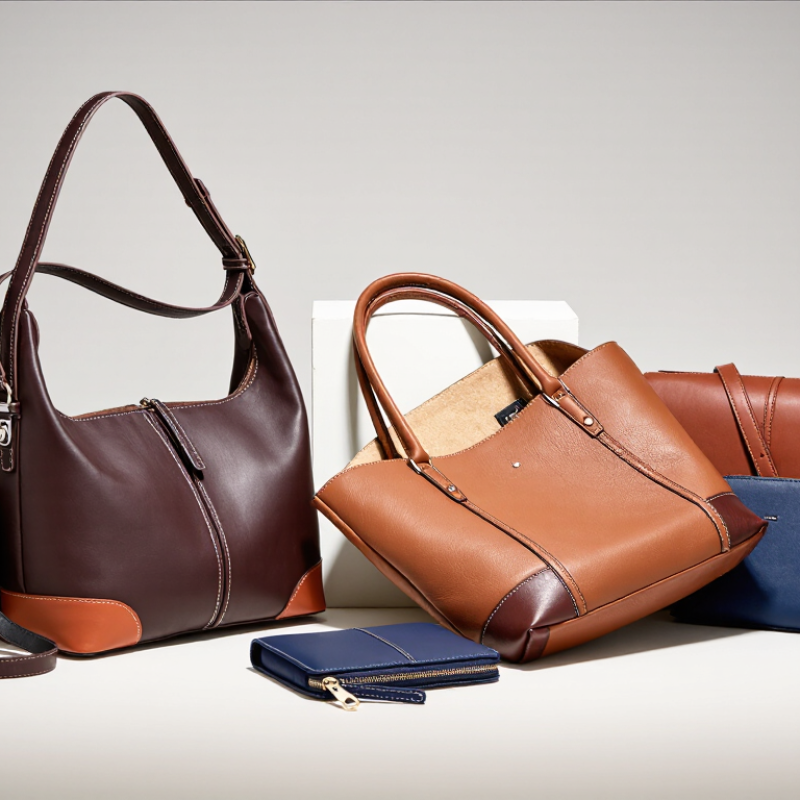
Leather Bag Market Scope: $242.85B Global Leather Goods Market in 2023 (GVR)
The global leather goods market was valued at USD 242.85 billion in 2023, according to Grand View Research’s Leather Goods Market Size, Share & Trends Analysis Report. The report projects a 6.6% compound annual growth rate from 2024 to 2030. That is a large market. But the figure covers more than leather bags, so it should not be treated as bag-specific demand.
For global buyers, market scale makes supplier evaluation more important, not less. Ask manufacturers for clear specifications on leather type, thickness, lining, hardware, and stitching. Check how closely production samples match approved specifications, including edge paint and seam alignment. Small details matter. A polished sample proves little if bulk production varies.
Request information on material sourcing and quality checks, then confirm it against samples and production records. Grand View Research’s growth forecast offers useful context, but it cannot predict demand for a particular bag style or price point. Buyers should compare lead times, minimum order quantities, and inspection procedures before committing. The figures help frame the opportunity. They do not replace due diligence.
Leather Terminology and Compliance: ISO 15115:2019, REACH, and Buyer Checks
ISO 15115:2019 defines leather terms; it is a vocabulary standard, not a product certificate. That distinction matters. A supplier calling a material “genuine leather” has not proved its composition, finish, or chemical safety. Ask for a specification identifying the hide, coating, lining, and any bonded or coated layers. The European Chemicals Agency’s REF-5 enforcement report recorded checks on more than 5,600 leather articles. Its scale shows why a single supplier declaration may not tell the whole story. Small details count: a dark coating on a bag handle can differ chemically from the exposed leather beneath it.
Under REACH, chromium VI in leather articles that contact skin is restricted above 3 mg/kg. Request recent test reports for the actual material and colour, not just a generic factory sample. Check the laboratory, test method, sample date, and whether the report covers the finished article. For broader substance checks, ask the supplier to identify relevant REACH restrictions and any substances of very high concern in scope. Paperwork can still be incomplete. Compare the report’s material description with a cut edge, lining, and coated surface from a production sample. Keep a retained sample and record the batch. A buyer’s checklist cannot replace competent testing, but it can expose mismatched documents before shipment.
10 Best Leather Bag Manufacturers for Global Buyers - Leather Terminology and Compliance: ISO 15115:2019, REACH, and Buyer Checks
A vendor-neutral comparison framework for evaluating leather-bag manufacturers. It focuses on verifiable capabilities and compliance checks rather than naming or ranking specific companies. Requirements depend on the destination market, product construction, and intended use.
| No. | Buyer Check | Terminology or Compliance Point | Evidence to Request | What a Strong Response Looks Like |
|---|---|---|---|---|
| 1 | Factory identity and production site | Confirm which legal entity makes the bags and where production takes place. A trading office, subcontractor, and factory are not necessarily the same entity. | Business registration details, site address, production overview, and disclosure of outsourced operations. | The supplier clearly identifies the manufacturing site and explains which processes are performed in-house or subcontracted. |
| 2 | Leather terminology | ISO 15115:2019 is a leather vocabulary standard. It helps clarify leather-related terms; it is not a factory certification or a product-quality grade. | A material specification that describes the leather type and construction in precise, consistent terms. | The supplier uses defined terminology and does not present ISO 15115:2019 as proof of certification or compliance. |
| 3 | Material description and construction | Clarify whether each component is leather, coated material, textile, lining, or a composite, and identify the areas where each material is used. | Bill of materials, product specification, material swatches, and component-level descriptions. | Descriptions distinguish the outer material from backing, coatings, trims, and non-leather components. |
| 4 | Leather and component traceability | Traceability supports material verification and helps buyers investigate quality or chemical concerns across the supply chain. | Supplier records for leather, lining, hardware, adhesives, and finishes, with lot or batch references where available. | Material records can be linked to the relevant product or production batch, and changes are communicated before approval. |
| 5 | REACH readiness for EU sales | REACH is the EU chemicals regulation (EC) No 1907/2006. Applicable restrictions and duties depend on the substance, article, and supply-chain role; a generic “REACH certificate” alone is not sufficient proof. | A product-specific restricted-substances declaration, relevant test reports, and confirmation of the responsible EU supply-chain contact. | The supplier identifies the materials assessed, the applicable requirements, the reports’ scope, and who handles required communication or obligations. |
| 6 | Chromium VI risk in leather | REACH Annex XVII entry 47 restricts chromium VI in leather articles, and leather parts of articles, that come into contact with the skin. The applicable limit is 3 mg/kg of the total dry weight of the leather, subject to the entry’s scope and conditions. | A relevant laboratory report identifying the tested leather, test method, result, and sample or batch reference. | Testing is tied to the actual leather used in the order, and the supplier can explain how material or process changes are controlled. |
| 7 | Other restricted substances | Depending on the materials and intended use, checks may include restricted azo colorants, nickel release from certain metal parts, or substances on the REACH Candidate List. | A risk-based test plan covering relevant leather, dyed components, metal hardware, coatings, and other materials. | The testing scope is based on the product’s components and destination-market rules rather than a one-size-fits-all report. |
| 8 | Test-report quality and relevance | A report is useful only when its sample, method, date, and tested material match the product being purchased. | Complete reports showing the laboratory, test method, sample identification, results, and report date. | Reports are traceable to the specified materials or production lots, and the supplier agrees to retest when materials change. |
| 9 | Bag performance and workmanship | Assess construction and use-related performance, such as stitching, handle attachment, hardware function, color transfer, and finish durability. ISO 11640 is a method for testing the color fastness of leather to rubbing. | Approved sample, inspection criteria, test results where relevant, and documented quality-control checkpoints. | Acceptance criteria are agreed before production and applied consistently to the approved materials and finished goods. |
| 10 | Production, packaging, and corrective action | A reliable supplier should be able to manage agreed specifications, production changes, inspection, packaging, shipment, and non-conforming goods. | Written order specifications, sample-approval records, inspection plan, packaging details, lead-time commitments, and corrective-action procedure. | Responsibilities, change approvals, defect handling, and shipment terms are documented before bulk production begins. |
How to Compare Manufacturers: MOQ, Production Capacity, Lead Time, and Quality Audits
Compare leather bag manufacturers against the same order scenario. Ask for MOQ by style, color, and leather type; a low headline MOQ may still require costly material minimums. Request monthly capacity, current utilization, and recent on-time delivery rates. A factory claiming 20,000 bags monthly means little if several large orders already occupy its lines. Ask for dated production schedules and sample records.
Separate sample approval, material sourcing, production, inspection, and shipping into distinct lead-time estimates. UNCTAD’s Review of Maritime Transport 2024 reports that global seaborne trade grew 2.4% in 2023, showing why transport assumptions can shift. The World Bank’s 2023 Logistics Performance Index assessed 139 economies, including shipment timeliness and tracking. Use these reports to assess route risk, not to predict one factory’s exact delivery date. Build in a buffer. Delays happen.
Quality audits should examine more than a polished showroom. Review incoming hide checks, stitching tolerances, hardware tests, defect records, and corrective-action logs. Ask to see recent inspection reports, then verify a sample order against agreed measurements and finish standards. A spreadsheet can still mislead. I would also check whether the audit covers the actual production site and subcontracting arrangements; this is easy to overlook, even with an impressive audit score.
10 Leading Leather Bag Manufacturers by Region, Product Focus, and Buyer Fit
A useful guide to ten leading leather bag manufacturers should compare regions, product strengths, and buyer fit—not treat one factory as best for everyone. Italian and Portuguese makers may suit buyers seeking refined finishing and smaller premium collections. Turkish workshops can offer flexible development across structured and soft-sided bags. Manufacturers in India, China, and Vietnam often support broader production needs, but capabilities vary between factories. Region is a starting point, not proof of quality.
Match each maker to the product. A factory experienced with tote bags may not handle miniature crossbody styles well. Ask for a sample showing edge paint, stitching at strap joints, lining, and zipper alignment. Request material specifications, production timelines, minimum order quantities, and inspection procedures in writing. A polished sample can still hide uneven bulk production. I have seen buyers focus too much on price; that choice can become expensive later. A factory’s communication also matters when measurements change.
Tips: Send the same tech pack to every candidate. Compare material thickness, hardware finish, sample revisions, and delivery estimates side by side. Ask who checks finished goods and how defects are recorded. Keep the first order manageable. Small details matter.
Leather Bag Manufacturing Regions: Buyer-Fit Snapshot
Editorial fit ratings by sourcing priority (1 = lower fit, 5 = higher fit). These are qualitative regional comparisons, not audited supplier statistics.
Use these regional profiles as a starting point for supplier research. Actual capabilities, minimum order quantities, lead times, and quality standards vary by manufacturer and should be verified directly.
Global Sourcing Checklist: HS 4202 Classification, Customs, and Import Compliance
For global buyers, HS 4202 is a useful starting point, not a final answer. Classification can depend on the bag’s function, construction, and outer surface material. A leather travel bag, wallet, and handbag may fall under different tariff subdivisions. National customs schedules can also add more specific codes. Confirm the current code with the importing country’s customs authority or a qualified customs broker before production.
Build a product file for each style. Include clear photos, dimensions, intended use, lining details, and the outer material’s composition. Ask the manufacturer for a consistent material description; “genuine leather” alone may not give customs enough detail. Check that the commercial invoice, packing list, and purchase order use matching product names, quantities, and values. Small mismatches can delay clearance. They happen.
Before shipment, verify applicable duties, country-of-origin marking rules, and document requirements for the destination market. Keep supplier declarations and relevant material records with the shipment file. Requirements vary by country and product, so do not rely on a code copied from an older order. A tidy checklist helps, but it cannot replace a current customs review. Even careful buyers sometimes discover that a familiar bag design has changed enough to warrant a fresh classification check.
Related Posts
-
China Top 10 Leather Handbag Manufacturers for Global Buyers
-
China Top 10 Custom Leather Bag Manufacturers for Global Buyers
-

Top 10 Custom Leather Bag Manufacturers in China?
-
Advantages of Choosing High End Leather Wallets for Timeless Style
-
Top 10 Leather Product Manufacturers You Should Know?
-
5 Compelling Reasons to Choose the Best Quality Leather Purses for Your Business